Why leading P&C insurers stop sending adjusters to every property
Gathering accurate property data for claims has always been a challenge for adjusters. Today the stakes are higher: the industry needs to match accuracy with scale.
)
Mississippi Tornadoes May 2026
Verisk reported roof repair and replacement costs rose 30% between 2022 and 2024. Non-catastrophic wind and hail claims grew 17% over the same period. On top of rising costs, manually intensive documentation makes every claim more expensive and more time-consuming.
Claims teams are already under pressure. Rising claim volumes are compressing the time available for thorough assessment, and legacy workflows aren’t keeping pace. Gathering required documentation is time-consuming, and when assessments rely heavily on on-site observation, adjuster subjectivity introduces another layer of risk.
The downstream effect is predictable: inaccurate claims, delayed decisions, and the homeowner dissatisfaction and litigation exposure that follow.
)
The bottlenecks in traditional claims workflows
Traditional claims workflows have several points of friction that accumulate into real operational overhead. On-site inspections are expensive and slow. Collecting complete property data requires multiple touchpoints. Documentation is manual and inconsistent.
Some carriers have adopted aerial imagery and AI tools to reduce manual inspection load, and they’re seeing results. But third-party point solutions only solve part of the problem. Some require adjusters or policyholders to manually capture or review images. Others don’t deliver fast enough to improve adjuster throughput. Loss adjustment expenses (LAE) stay elevated, and settlement timelines stretch.
The deeper problem is fragmentation. Separate solutions for imagery, damage analysis, measurements, and material pricing create compounding friction at every connection point. Data quality becomes inconsistent, errors surface between platforms, and the model breaks down when claim volume spikes.
What does a modernized claim workflow look like?
When property intelligence is current, complete, and integrated into the claims workflow, adjuster travel drops, resolution accelerates, and the overhead of manual documentation disappears.
“When claims are coming in, our claims reps take in the FNOL, look at the Nearmap image and can quickly see if it is going to be a large loss or if there are just a few shingles missing from a home.”
Executive VP, Major U.S. Insurer
High-resolution aerial imagery allows adjusters to assess the extent of damage, identify fraud or a pre-existing condition, and verify repairs without requiring an on-site visit or policyholder input. AI-powered analysis streamlines claim validation and enables investigators to make better-informed decisions more quickly.
)
Mississippi Tornadoes
May 2026
Investigators can also use aerial roof and exterior measurements to generate precise estimates and accurately manage indemnity. These detailed measurements and wireframe diagrams integrate with the Verisk Xactimate®/XactAnalysis® workflow, ensuring accuracy, consistency, and claim confidence.
)
Material pricing is the third element of a complete claims workflow. After determining accurate property measurements, accessing guaranteed, timely, localized material pricing is key to creating an accurate estimate. Material pricing integrated into adjusters’ workflow and estimating platform reduces frictions and quickens settlement time.
Few platforms bring all three together. Fragmented solutions create compounding friction, and that gap becomes most visible at scale and during peak CAT volume. A single, integrated solution eliminates that overhead.
Accelerate CAT responses for faster policyholder relief
Hurricanes, tornadoes, and similar natural disasters are on the rise, and each one makes accurate, timely property assessment harder. Property claims are surging, but catastrophe claims response is slow. When infrastructure is destroyed, property data is outdated, and solutions are fragmented, accurate damage assessment becomes significantly harder.
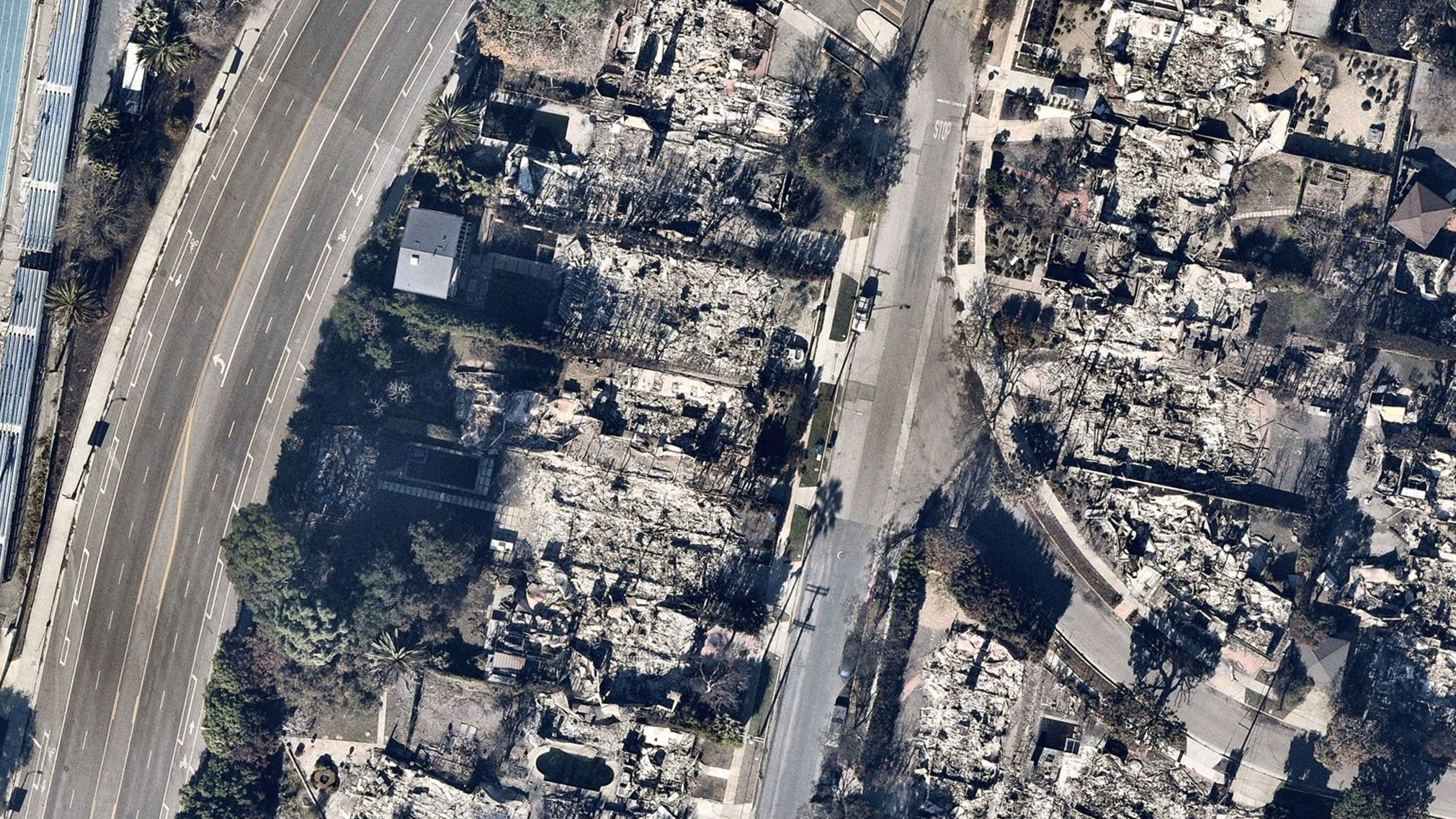
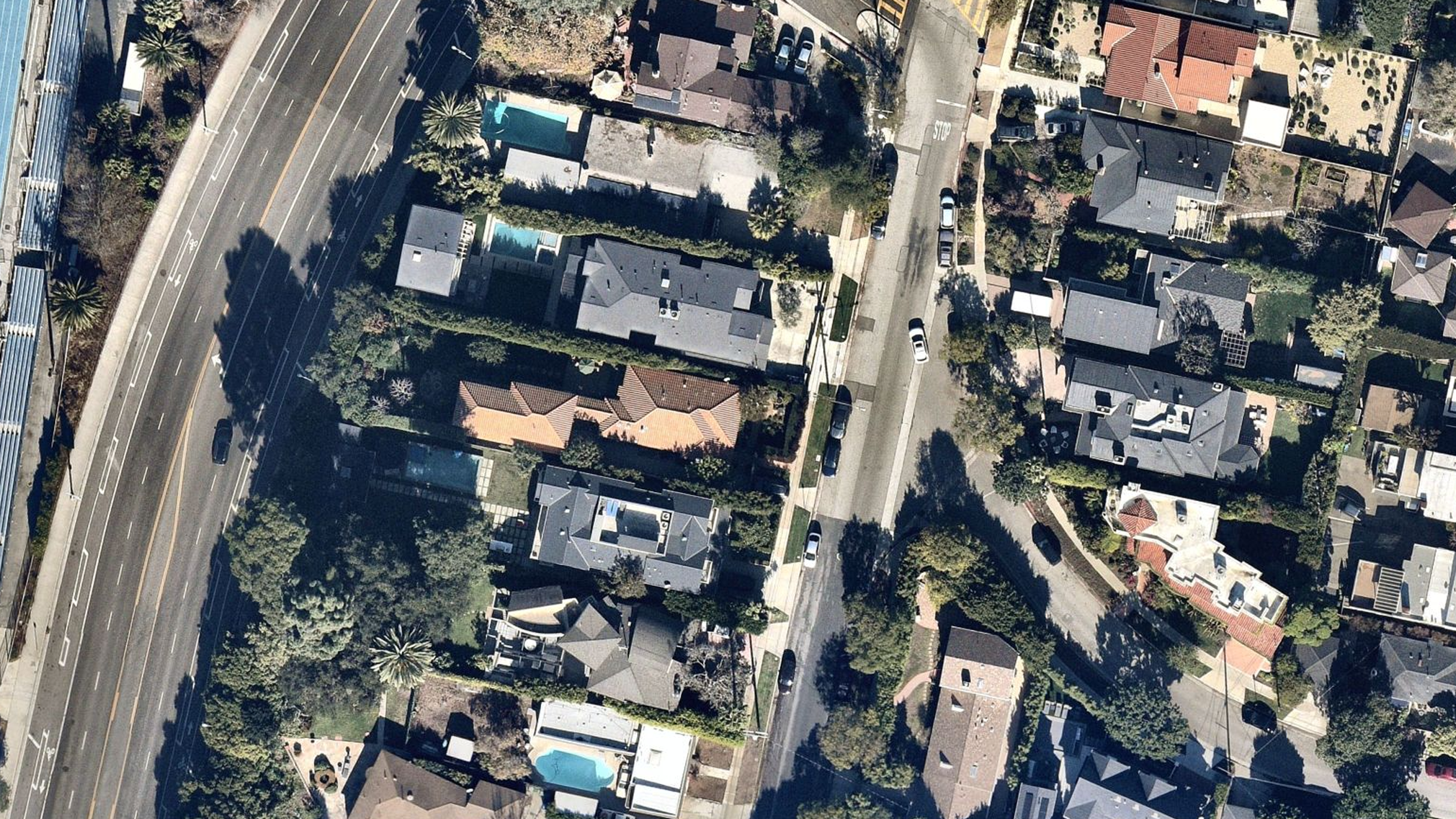
Palisades Wildfire
January 2025
A traditional workflow exacerbates these issues. On-site visits are often possible only weeks after a disaster, making it difficult to get immediate visibility into extent and severity. Adjusters are deployed without damage priority data, which drives up LAE and slows triage. Lack of immediate data also exposes the insurer to fraud claims.
A current CAT workflow built on complete property intelligence works differently:
- Frequently captured aerial imagery (up to three times a year) creates the pre-event baseline that makes post-event comparison immediate
- ImpactResponse delivers post-CAT imagery and AI-powered damage analysis rapidly, enabling claims triage before field teams are deployed.
- Property measurements available in Xactimate within as little as 50 minutes reduce the need for on-site manual measurement.
- Guaranteed, localized material pricing to go with the property measurements for accurate estimates.
When aerial imagery, fast delivery, and integrated material pricing work together, claims can be paid up to 60% faster. A single, integrated solution for CAT claims workflow removes the friction that fragmented tools create at exactly the moment it costs most.
)
Streamline your claims workflow with a complete solution
Claims teams have long accepted fragmentation as the cost of doing business. That’s disconnected vendors and multi-step workflows that slow down precisely when speed matters most. Property measurements, in particular, suffer from over-reliance on a single, fragmented vendor. The risk is highest when CAT events spike volume and the single vendor’s limitations become your operational ceiling.
With Nearmap as the property intelligence layer behind their claims workflow, teams can reduce operational risk, price more accurately, and resolve claims faster... with measurably lower LAE per claim.