The aerial imagery problem nobody talked about, and how it got solved
Combining high resolution with frequent updates is where the real advantage of aerial imagery lives. You are not just seeing the area. You can track what changed, prioritise work, reduce site visits, and document conditions with the confidence that what you are looking at is accurate.
)
SYDNEY HARBOUR AU
For years, buying aerial imagery meant picking your poison.
You could get incredible detail. But imagery was old by the time it reached you. Or you could get wide coverage. But resolution was too low to confidently make decisions from. Either way, something important was missing.
That tradeoff was tolerable when aerial imagery was a background layer. It stops being that when your team is making decisions (pricing risk, planning infrastructure, scoping a construction site, assessing storm damage) that depend on data being both sharp and current. At scale — across cities, regions, or entire portfolios — imagery that’s detailed but stale or fresh but blurry are both the wrong answer.
Nearmap solved this problem. The Standard Capture program delivers as low as 1.57” ground sampling distance (GSD) across metro-wide coverage, with up to three captures per year in the United States and six per year in Australia. For projects that need even greater precision, custom captures can reach 1” GSD or better. That is not a marginal improvement over what came before. It is a fundamentally different approach to what aerial imagery can do.
But the goal was never a better spec sheet. It was imagery that’s truly dependable in the real world — sharp enough to see a damaged shingle, current enough to reflect last month’s conditions, and consistent enough to trust across every property in a portfolio.
)
Resolution you can trust in the real world
GSD is where most conversations about aerial imagery start. And for good reason. Two providers can claim the same GSD but deliver very different results when your team tries to measure something, verify a condition, or compare captures over time.
What makes the difference is whether the imagery is genuinely inspection-grade in practice — not just on a spec sheet.
There are four things that determine this.
Radiometric quality is how well the imagery handles light and color. Good radiometric quality means details are not washed out in bright areas or lost in shadow. Poor radiometric quality means features that should be visible are not. This matters when you are trying to identify roof material, surface condition, or structural feature from the desktop.
Geometric accuracy is how well the imagery aligns to real-world coordinates. If the geometry is off, measurements are unreliable — which is a problem for engineering, planning, and compliance workflows where precision is not optional. Nearmap imagery is evaluated against ASPRS accuracy standards, meaning measurements made from it are defensible in professional contexts.
Image sharpness is whether edges and fine details are crisp or softened by motion blur, optics, or processing. Sharpness is what determines whether you can confidently identify a specific feature (e.g., a cracked shingle, a pooling water mark, or a vegetation encroachment) from the desktop rather than sending someone to the site.
Processing consistency is whether quality is maintained across the entire coverage area, not just in a few best-looking sample tiles. Inconsistent processing is the most common failure mode of assembled imagery programs. The quality looks fine on a demo but varies across the entire portfolio.
In plain terms: imagery that is blurry, uneven, or slightly distorted can look fine at a glance, but breaks down the moment your team tries to measure something, verify a condition, or defend a decision built on it. When Nearmap says 1.57” GSD, it means a level of detail you can trust in real-world applications.
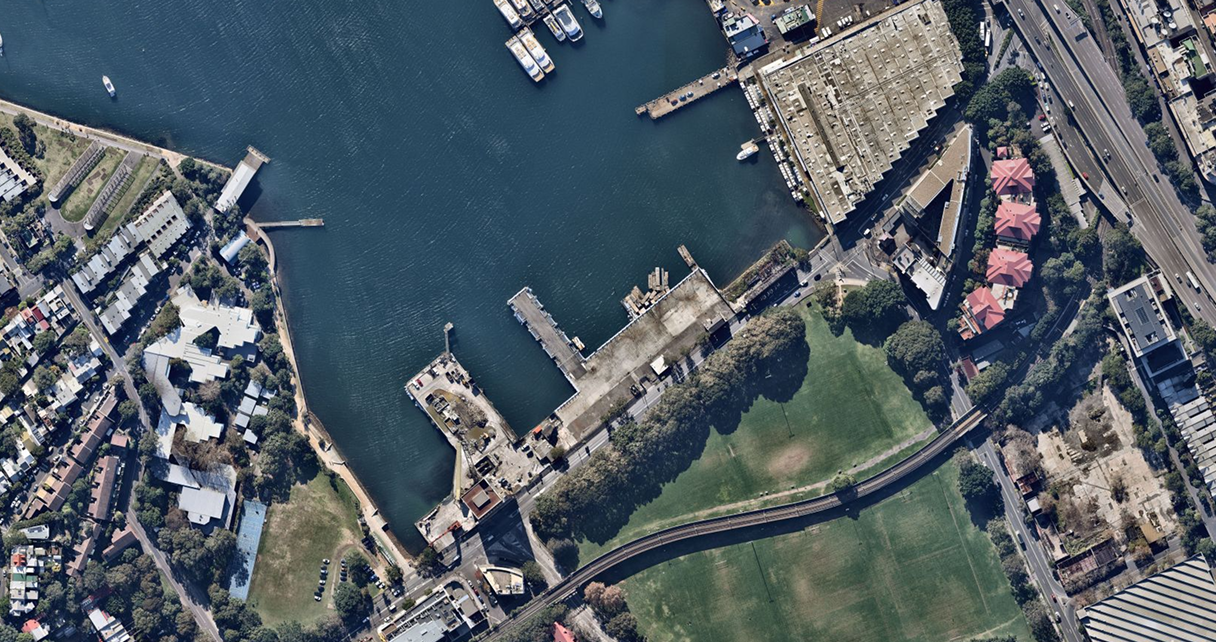
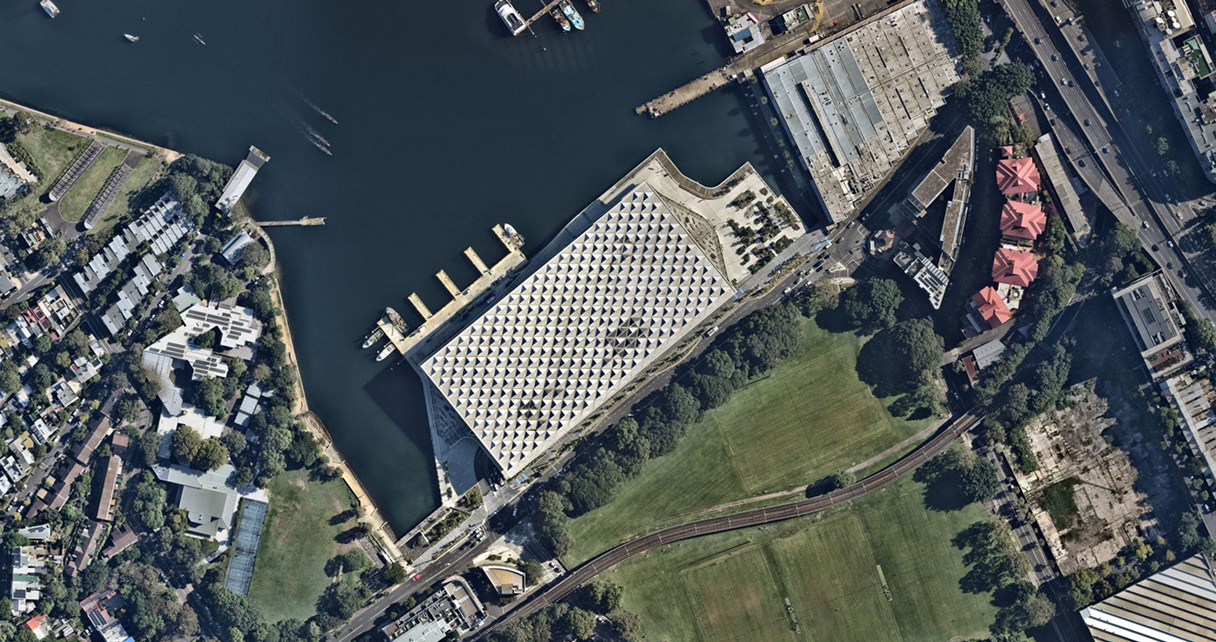
Currency matters, because the world changes fast
Resolution gets most of the attention during procurement. Freshness (how recent the imagery is) is often treated as secondary.
That is backwards.
The most detailed imagery in the world loses its value the moment the conditions it captured no longer exist. And conditions change faster than teams realise.
A building that appeared on a capture last year may have been replaced, expanded, or demolished. A roof that looked sound 18 months ago may have deteriorated significantly — or been replaced entirely. A site that appeared clear might now have structures on it that affect every assessment built on the original data. After a hurricane, wildfire, or flood, conditions change so rapidly that imagery captured before the event or weeks after it tells a completely different story than imagery captured days after clearing.
These are not edge cases. They are the predictable, routine ways that the built environment changes — and every one of them affects insurance pricing, claims assessment, compliance determinations, property valuation, and risk management in ways that only current imagery reliably captures.
This is why combining high resolution with frequent updates is where the real advantage of aerial imagery lives. You are not just seeing the area. You can track what changed, prioritise work, reduce site visits, and document conditions with the confidence that what you are looking at is accurate.
)
What each imagery type actually does
Modern aerial intelligence is not one product. It’s a range of views — each designed for a specific job. Understanding what each type is built for helps teams get more from the imagery.
Vertical imagery is the foundation. The classic bird’s-eye view, captured at 1.57” to 2.95” GSD with multiple annual updates, is what most workflows depend on for base mapping, broad-area analysis, and tracking change over time. At this resolution and frequency, vertical imagery is the starting point for most property decisions, such as spotting changes across a neighborhood, comparing conditions across a portfolio, or establishing a baseline for AI detection.
True ortho is vertical imagery corrected to reduce the distortions that make standard vertical imagery unreliable for precise measurement, particularly around tall buildings and uneven terrain. In standard vertical imagery, tall structures appear to lean outward from the center of the capture. True ortho corrects for this, producing imagery where scale is more consistent across every pixel. For engineering, planning, or compliance workflows where measurement accuracy needs to hold up to professional scrutiny, true ortho is the right starting point.
Oblique and panorama views fill the gap that vertical imagery cannot. Vertical imagery shows you the top of a building. Oblique and panorama views show you the sides (roof features and conditions, building facades and exterior condition, windows, walls, and doors). For insurance claims review, property assessment, roofing workflows, and site evaluation, the ability to see a building from multiple angles from the desktop eliminates the need for site visits that would otherwise be required to gather the same information.
3D products — DSM, DTM, and Textured Mesh — add shape and depth to the imagery. A Digital Surface Model (DSM) captures the tops of buildings, trees, and other objects and is useful for line-of-sight analysis and surface context. A Digital Terrain Model (DTM) represents the bare earth beneath those objects, making it useful for drainage planning, grading analysis, and terrain modeling. A Textured Mesh creates a realistic, shareable 3D model of the built environment, which is ideal for visualisation and context in planning and stakeholder communication. Together, 3D products help teams understand how a place sits in the real world. This is particularly important for infrastructure planning, construction, telecom network design, and volumetric analysis.
Near-infrared (NIR) captures light outside the visible spectrum, making it useful for detecting vegetation health and environmental signals that standard imagery can’t reveal. NIR is practical for environmental monitoring, vegetation management, and compliance workflows where the condition of vegetation relative to a structure is relevant to the decision being made.
Post-disaster intelligence is built for situations where every hour of delay has a direct cost. When disaster strikes, carriers, emergency managers, and government teams need a current, shared picture of what happened. Nearmap ImpactResponse mobilises to capture affected areas and deliver high-resolution imagery as early as 24 to 72 hours after clearing, giving every team involved in response and recovery the intelligence they need before conditions change further or resources are misallocated.
)
Mitchell Freeway
Perth, WA
Why comprehensive coverage changes the equation
The advantage of modern aerial intelligence is not resolution, freshness, or coverage in isolation. It is all three, together, consistently maintained across a holistic program — not stitched together through one-off project captures. This distinction doesn’t fully present itself until teams try to operate at scale.
Here’s how one-off captures create gaps and inconsistencies that compound across portfolios:
A national insurer assessing risk across thousands of properties needs consistent data quality whether they are looking at properties in Sydney or Perth. If image quality varies by region because different capture programs supplied different areas, risk scoring becomes inconsistent across the book, creating a problem that amplifies at renewal.
A government agency managing infrastructure, planning, and compliance across a growing jurisdiction needs systemic coverage that updates predictably. Project-by-project captures can leave some areas current and others more than a year behind.
An engineering firm evaluating sites across multiple regions for a client needs to compare every location on equal footing (same resolution, vintage, and quality standards). When data quality varies by region, comparisons are not comparisons — they are approximations.
This is what coverage planning produces that project-based captures cannot: repeatability. The ability to compare sites the same way every time. To track changes consistently across an entire portfolio. To document conditions with confidence — not with a footnote explaining which areas were captured under which program at which standard.
Nearmap coverage spans the vast majority of the U.S. population, with comparable programs in Australia, Canada, and New Zealand. Coverage is maintained at a consistent resolution and quality across regular update cycles. That consistency is what makes standardised workflows possible. And standardised workflows are what make decisions defensible.
)
Current imagery acts. Historical imagery proves.
One more dimension that rarely gets the attention it deserves: the value of a deep, consistent historical archive.
Current imagery gives teams immediate situational awareness (the ability to see what conditions exist right now and act on that information). That is the operational value most teams focus on when evaluating an imagery program.
Historical imagery does something different — but equally important. It enables teams to prove what changed, and when. That capability matters in ways that only become clear when a decision is challenged.
An insurance adjuster determining whether roof damage is storm-related or pre-existing needs a dated historical capture that shows the property’s condition before the event. A government compliance officer documenting an unapproved development needs captures that show not just that a structure exists, but when it appeared. An engineering firm defending a design decision needs historical captures that are precise enough to show pre-existing site conditions at the time the design was developed.
The Nearmap historical image library extends back over a decade. And it was all captured through the same owned pipeline, processed to consistent standards, and date-stamped by the same system. This is what makes historical comparison defensible rather than approximate. When the before and after images come from the same program, processed to the same standards, the comparison holds up.
Current imagery helps you act now. Historical imagery helps you prove what changed — and when. Both matter. Most providers offer one at the expense of the other. Nearmap offers both.
These are not technical capabilities for their own sake. They are the foundation of decisions that hold up — across insurance portfolios, government jurisdictions, and engineering projects that cannot afford to be wrong.
The organisations Nearmap was built for are the ones that cannot accept the old tradeoffs. They need high resolution and broad coverage. Precision and currency. Quality and scale.
That combination is what Nearmap delivers. And it is why the era of picking your poison in aerial imagery is over.
Certain decisions start here
Book a demo and see what true geospatial intelligence looks like using real data from your market.
Try Nearmap