Why insurance innovation takes more than a great pilot
Dave Tobias and Lynn Thompson explore why insurance innovation stalls, what it takes to scale AI, and why the right problem, people, and governance matter more than a shiny demo.
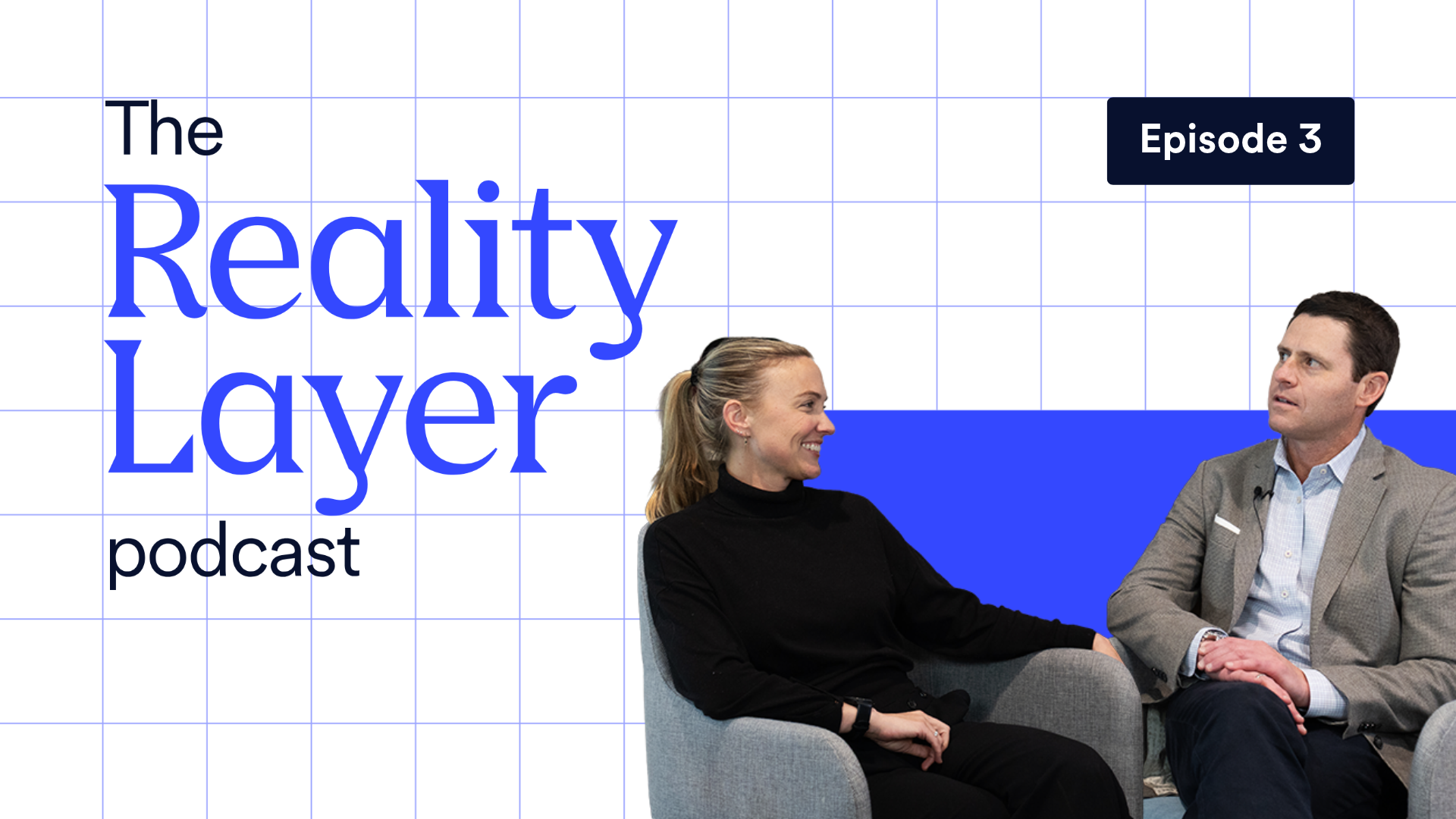



“I love data. I love the way that you can use data to understand the world around you and then from that change the way that people are interacting and protecting each other.”
Lynn ThompsonGlobal Head of Strategy & Partnerships at QBE VenturesEpisode 3 transcript
[00:00:00] David Tobias: Hello and welcome to the Reality Layer podcast. I’m Dave Tobias, Chief Product Officer at Nearmap. Let’s get into today’s episode. Today I’m joined by Lynn Thompson, partner and global head of strategy and partnerships at QBE Ventures. Lynn sits at the intersection of ventures and innovation within QBEqbe. This gives her a dynamic view of what’s happening with big data, AI and technology and how that’s playing out within a big organization. I’m super excited to have Lynn’s viewpoint today on the podcast. Lynn, thanks for being here with me.
[00:00:34] Lynn Thompson: It’s my pleasure.
[00:00:35] David Tobias: Good to see you in person. I’m glad we were able to do this, you know, one on one. You know, as we kind of get into it, you’ve had a really interesting career. You’ve sat in the middle of like big organizations and venture and innovation within companies. What do you think you know, has been most impactful? If you look back, we’ll talk about the future here in a little bit. But if you look back, like, what has that allowed you to do?
[00:01:00] Lynn Thompson: That’s a really interesting question. I’m glad I had coffee to start the day. Look, I think the biggest thing for me is finding the balance between looking forward to where we think the world is going. But solving for the future isn’t helpful. We have to actually anchor in what’s here and now. You can get really tied up in speculation and enthusiasm for what might be true in the future, but it’s not useful unless it’s solving something for someone. Actually, as it happens, our company started working together in that way. I think when I started at QBE Ventures five years ago, one of the first things I saw actually was some of our underwriters just using the maps, like visually looking at it and then manually going through their processes. And that was a really good moment of realizing that there’s so much value being left on the table because people intuitively know what they need to get their work done better. But the tooling hasn’t caught up yet. I think when we can see that, that’s generally the spark of there’s something really interesting to do here that will be positive. And I think that straddles the corporate side, the venture side, the startup side, because all three, all three teams, if you think of them in that way, need a problem that needs to be solved, that it’s worth allocating people time, attention against it so it can unlock kind of in the immediate. And that puts you on a trajectory for the future.
[00:02:27] David Tobias: You know, you’ve said before that you really believe in tech for good. So sitting at this intersection and venture and you know, the organization and innovation, what does that mean to you? How, how have you been able to take some of these through lines, through to actually, you know, help insurers, help solve these real problems that we’re all facing?
[00:02:46] Lynn Thompson: Yeah, that’s the big motivator for me, I think, why I’m actually in the insurance industry. Insurance plays a really important role as the safety net and bedrock of society. Everywhere you look, every building that you’re in, every vehicle that you get into, every person that you interact with, they are interacting, whether intentionally or unintentionally, with insurance, as I think. And I love, I love data. So I love the way that you can use data to understand the world around you and then from that change the way that people are interacting and protecting each other. So that, that for me is the underlying driver of why the insurance sector exists. I think we have a responsibility to innovate over the top of what’s now possible to make sure that insurance can keep up with what, what the world needs us to be.
[00:03:32] David Tobias: I mean, insurance is really the glue that keeps the economy moving. Right, Keeps us protected, keeps us safe?
[00:03:38] Lynn Thompson: We like to think so. Yeah.
[00:03:39] David Tobias: Well, I think, you know, commerce kind of fails in certain ways without good insurance options. And I think, you know, the innovation around that’s always so interesting. You’ve been, you’ve been a part of that. When you think about tech for good and specifically around insurance and data, there’s a real underinsurance problem that we’re facing globally. How do you see some of this technology, some of this data coming together and helping solve that?
[00:04:04] Lynn Thompson: Yeah, that’s a really good question. I mean, I think of the major disasters that we’ve had, every, every country profile looks different. You know, whether you have adequate insurance for the market or whether it’s underinsured dramatically changes the trajectory and the outlook of the country going forward. If I bring it closer to home. I think one of the really interesting things that I came across was work published by the Insurance Council of Australia that showed that we’re effectively double building houses because of disasters. It was 150k new homes in being built and 120k homes being repaired from natural disasters. And so if we look at that and we go, well, structurally this doesn’t make sense. We’re putting as much effort, almost as much effort into just maintaining the status quo of housing stock available versus introducing new housing stock, which is what’s critically needed in the Australian market so we can talk about underinsurance, But I think we need to step a little bit beyond that and go, what are the assets we actually need to insure? And how do we move beyond thinking just replace like for like to actually structurally getting much smarter about where should we be building, where should and how should we be maintaining vehicles on the road? How should we be protecting our businesses from a cyber standpoint? I think when we look at it from that perspective, that’s when we get a much better view on when we have underinsurance. What should we be doing when we have insurance and coverage gaps? What are the possibilities opening up to us? I’m seeing a huge amount of activity in the capital markets. You know, QV’s announced a bonds program last year, natural catastrophe bonds program. It leads to the underinsurance challenge. Requires a lot of creative thinking to solve. I don’t think you can take the insurance industry as it is today and just layer it on the world and say, this will work. The unit economics, customers don’t stack up the profitability a lot of the time. So the insurance carriers and the reinsurers doesn’t stack up either. So it does require a whole stack of creative thinking. I think data for us is a huge unlock because we need the precision, we need the specificity on what is the quality of risk. Can we move the needle on the quality of risk? Then you can have a meaningful discussion about what products and what protection or what coverage you can offer a community or a business.
[00:06:29] David Tobias: So whether it be the reinsurance and the underinsurance problem, the climate shifts that we’re all facing. We’re in a regulated industry and many of the customers I deal with every day that we serve are regulated in some form or fashion with all the tools that are coming out. Specifically, we’ll talk about AI. We’ve made it all of five minutes without bringing up AI. A lot of these things in concept sound fantastic, sound magical, right? But we’re in a regulated industry that ultimately, at least for now, humans buy insurance and we need to support those humans. Right? There’s an insured at the end of the transaction. How do you deal with that? Because again, you’re at this intersection of helping to solve business problems, internal innovation, and then startups. I’m sure all the time somebody’s pitching you this magical startup idea that might not work in the way they think in a regulated industry. For insurers, how do you position some of that? How do you get that onto the right track to say, you know, yep, but it’s not going to be in the way that you think.
[00:07:31] Lynn Thompson: Yeah, that’s a look. That’s a really good point. And most plans, the moment they impact with reality, they don’t work the way that you think. I’ve certainly see that play out with the way that we tackle massive problems. I think one of the problems that’s worth kind of speaking about is under insurance. So again, within the Australian market, one of the problems that we’ve been leaning into is what do we do when our clients don’t have the right coverage? So what happens if, for example, they’ve added new structures on their property and the insurance hasn’t been updated for five years? What happens if the kind of risk loading of that area has changed dramatically? How do we have that conversation with the client if their premiums are increasing? These are really tricky conversations, but they’re really important conversations to have all of the tooling, all of the data. It only helps if it helps to inform these conversations in the moment of need. And so what I often see is a smorgasbord of tools and information possibility. I said, you’ve actually got to isolate back down to this moment. We’ve worked together on this problem. It took us about four years to really solve it in a thoughtful, meaningful and then scaled way. So within one of our business units we had a challenge and this was picked up by the regulator as well. We had a challenge that, that customers weren’t necessarily getting the right coverage for their property. And when you’ve got people in flood affected areas, in fire affected areas, this really matters. So it was a very deliberate approach. We started small, we picked five areas we looked at. What would it mean if we could give our frontline staff X information just so that they were better equipped to have a conversation with their clients. We help them look at the overall portfolio structure and say, you know, these 20%, they’re probably the ones you need to be paying attention to because they probably have the biggest coverage gaps, what they actually need for their property. And then AI was layered in underneath that. Just, you know, usefully there’s a change detection, someone’s added a new structure. We can see that maybe the condition of the roof doesn’t look particularly great. And so maybe they need to have a conversation about what’s happening on their property. It’s agricultural land and no one’s quite sure where the property boundaries are. So what’s the actual land that you want insured? Again, these are all very pragmatic, real useful conversations that need to be had. And I think that that’s where by being very authentic in what’s actually needed, I think is really helpful. Because once you’ve done that and you’ve proven to customers that you’re doing this with really positive intent and same to staff, it’s not only positive intent, but it’s helping them to do their jobs better. You earn the permission and you earn the trust of the other teams and the executives to then scale. And so I think by the time, you know, with this particular project that we started as an experiment a few years back, by the time it finally became time to take it nationwide, it was a fait accompli. It wasn’t debated about whether we should or shouldn’t. The answer was obvious.
[00:10:43] David Tobias: Well, you hit on a few different really salient points. One, bringing the teams and the people along very, very early through the experience you’re talking about, you picked the people and the groups very deliberately.
[00:10:56] Lynn Thompson: And I think it’s more than that. We know who our best underwriters are, we know who our high performing teams are and they generally have a high degree of confidence about what they wish they could do. But the tools just don’t deliver it today. So we don’t have to actually imagination what’s possible we have to say to them, what’s holding you back? What’s stopping you? And I think when we again, when we do that and ground in that we get to much better outcomes with technology that’s adopted with process changes that genuinely move the needle on customer outcomes and performance outcomes as more satisfying.
[00:11:32] David Tobias: Yeah, no, it’s, you know, it’s been interesting to watch that process obviously firsthand, but you know, it all starts with what is the problem you’re trying to solve. And being very deliberate about that. When you see these things go awry, whether it be with AI tools or any sort of innovation transformation, is it because people haven’t defined the problem or they don’t understand it? Is it because they’re enamored with the technology and you know, they have a nail and everything’s a hammer?
[00:12:02] Lynn Thompson: I don’t think so. I think a lot of it is actually will. So the conviction that the problem is worth solving, clarity of what the size of the priors is, if it works, I think everything else is some level of detail against those two points. I think that if you’re a team leader and you have clarity on the problem that you need to solve, it’s within your control to solve it, then you can access the tooling to do it. When we look at Much more structural changes. You know, for the QB business, we really needed to change a lot of our overall book shape and portfolio performance. We had a higher level of natural catastrophe exposure. So we went embarked on a program which is quite public to reduce our natural catastrophe exposure. Brought that down. Now that that’s been brought down, now we can look thoughtfully at how we regrow selectively in the property space. All of that takes four years of considered will and determination against the objectives. I think if, if you don’t have that overall your leadership for making big changes in the business, it’s very tricky to get the small, you know, did you define success properly? It doesn’t actually matter if you haven’t got the overall supportive context. It then becomes a laddering enabling factor. Certainly when you define success well, with a really strong business case, your probability of success is much, much higher. But it’s even that is not always enough. I think it’s the, it’s the will, the determination, the fortitude of the team that’s doing the work and then the clarity on the definition of success and the definition of what needs to be true to make this work. Because you have to be willing. I think on average, I reckon it takes about five iterations. You probably see this in your product development cycles as well. It takes about five iterations to go from this is the opportunity that we could see through to now. It’s delivering value.
[00:14:01] David Tobias: Yeah, look, there’s pivots across the way with all these things. Right. And if you don’t pivot, you never actually get to the right answer in some cases. I think that fortitude. Right, is an important piece. You know, you’ve mentioned four years a couple of times.
[00:14:15] Lynn Thompson: Yeah.
[00:14:15] David Tobias: Is that how long you see some
[00:14:17] Lynn Thompson: of these things taking to get to scale? Yes, I think you can, you can get pilot. At least for us we can get. We’ve got a program called Lighthouse, so we can get pilots early stage things up and running in a matter of weeks to months. And that’s fine. But what everyone really cares about, impact and impact only happens when you say we’re doing this at scale to solve a problem like property. Property is 20% of QV is GWP. So when we work on problems here and when the solutions can scale, this is substantive and material to everyone that’s involved. I think that generally takes two to three years, best case in the insurance industry to get to that level of scale for rolling out core capability.
[00:15:01] David Tobias: It’s interesting as I’ve been talking to people on this podcast and beyond how few POCs make it to production, which was always the case. But with AI it’s become easier to spin up a POC in certain ways. So I feel like defining that success criteria, making sure that executive buy in all the way from the top down is strong. Because rarely in my experience does it seem that the technology is the problem. It’s all the other things that you mentioned, right? Is there buy in, is there perseverance? Is there, you know, is the problem big enough to solve? Has that been your experience?
[00:15:36] Lynn Thompson: Yeah, certainly. I think the ratio was around 80% of POCs don’t go anywhere. I call it the pilot to nowhere problem. When I was on startup side, that was our arch nemesis, Kryptonite, the thing that we feared the most. The lesson that I’ve had since being on the corporate CVC side is plan for the pathway to scale. Most people think of a pilot, they run a pilot, there’s success criteria, it’s binary, yes or no, and then there’s this like graduation moment and then it’s graduated and it will scale. The reality is much messier. I now build in transition pathways. So there’s a transition period of six months when it moves from the POC mode into the production production mode. There’s handovers for the different teams. I think that part of just not assuming that it’s so black and white, not assuming that the team that’s going to take it on is ready or able or willing, stepping people towards it, I think is leading to a lot more success. Again, we’ve seen that with the work that we’ve done with one of the companies that you actually applied from us a few years back where we know what the value is when we’re trying to understand the value of an insured property and that’s an input that’s useful for everyone across the board. We’ve seen that in work that we’ve recently done around legal intelligence, which is a fascinating area around how do you take capability from the legal tech circles and bring that smarts into the insurance workflow? It’s a missing space in the insurance world today and therefore it’s not a once and done thing. We need to transition our way to scale.
[00:17:18] David Tobias: So one of the things that I think is exciting about AI, that this new iteration of AI, like I think people forget insurance companies, big enterprises across the board have been using AI, using machine learning, computer vision, these things for, for a long time. But an unlocking sort of the agentic workflows that you can build now is to comprehend mass scale Data and help make decisions on it quickly. You know, for us we have 130 AI image detections. That’s a lot for a human to comprehend and understand. But an agentic system can help unlock the value of that. How are you seeing that play out? Because a lot of these tools sort of existed before. But do you feel that we have the capability now to comprehend more information because of these tools and use it to make better decisions?
[00:18:06] Lynn Thompson: Absolutely. I mean, we’ve spoken about this before. I think we had generation one, which is robotic process automation. And that never really worked for the insurance sector because very rarely did we have something that you could do a rules based approach and get the whole way through the process. Then we had computer vision and we had machine learning and we had deep learning. And so we’ve been using different forms of AI and data science for the last decade. But the last iteration of models, they were very finicky. I mean, I have my experience, I’m sure you have the same where you’re trying to train a computer vision model to recognize a door or you’ve got 10,000 in your test data set and then you got to redo it and then you got to do it for the right hand door. It was a very laborious process. I think the big unlock now is just we can stand on the shoulder of giants effectively. We’ve got these incredible models of general purpose that have been trained to a level of usefulness that we’ve never seen before, that can do cognition and navigate through, let’s call it when the binary rules based approach wouldn’t get there. But I think that’s where the nuance is because the general models won’t be able to perform insurance tasks. And so it’s about saying you now have effectively scaled intelligence that can sit alongside your workforce. Insert whatever model you want here the same way we previously looked at. Well, how do you bring these two types of knowledge together? I think what’s interesting now is we can bring scaled intelligence sitting alongside our people. So when they’re going through portfolio shaping, for example, previously it was a very manual process. There’s a very limited amount of data that you could actually bring into that process. Before, people would just get. You just have too much information, you can’t process it. Whereas now we can bring in everything, we can bring in the satellite data, we can bring in the natural catastrophe models, we can bring in the roof level fine, we can bring in the oblique data and we can actually get really, really granular and detailed on. This is where we have really interesting insurable assets. Here are developments that are planned that maybe we should be working with them around the prevention measures that they put into the properties to harden into the standard that makes them insurable. That just wasn’t possible. It wasn’t possible with this scale and it wasn’t possible at the speed that we can do it now. I think the whole industry at the moment is focusing on speed. So how quickly can they get submissions through, how quickly can they turn around for brokers? I think that will keep us going for the next year or two and everyone will keep fighting on the speed journey. But I think what’s going to happen next is leakage. So every time you have information handed between different teams, you get knowledge leakage. And I think what’s going to end up happening is around how do we improve both speed and then how do we get the collaborations. We get really good knowledge loops between all the different teams. Actuary claims underwriting, take actuary capability, apply it to claims, take the insight, apply that to understand inflation. Now really run that through your pricing models. I think that’s what the next generation of insurers are starting to look at. Now to go back to your initial question, would that be possible without the current frontier models? Absolutely not.
[00:21:23] David Tobias: I think important point you brought up a couple times though is it’s still, you know, a regulated.
[00:21:28] Lynn Thompson: Yes.
[00:21:29] David Tobias: Industry. And so the idea, and we’ve all had this experience, right, where you plug something into a frontier model today, you do it tomorrow and you get a slightly different answer.
[00:21:38] Lynn Thompson: You have to have a predictable, repeatable, audible, governed workflow.
[00:21:42] David Tobias: I think the provenance of data starts to matter a lot.
[00:21:45] Lynn Thompson: The provenance of data and the consistency of decision making. So you have to have consistency in the way that you ask questions, you have to have consistency in the way that you’re getting answers back. We can’t take models that change every day and give us a different output or a different underwriting suggestion every day. That just doesn’t work. We have to have insight into how the model’s developing, when is there a new release, what is the delta? These are the conditions that have to be true in order for AI to actually be adopted within the insurance sector. Which is why I’m still seeing so many really good specialized insurtech startups. YMC still there’s so much interest for carriers to work with insurtech players because there’s an acknowledgement that there is a base level of use cases and need for productivity gain that the general purpose models can handle and you know, the Big tech players of the world would give you a massive uplift there. But when it comes into the things that actually moves the needle on performance outcomes and shareholder outcomes, these players don’t go there. They won’t go there because of these reasons. You have to be very, very specialized and specific in the way that you setting up and deploying AI for highly predictable, highly repeatable outcomes for a regulated industry.
[00:23:08] David Tobias: How do you deal with the internal stakeholders that believe some of these new tools are magic? So I see sometimes the technology is perceived that way and so people expect magic results, 100% accuracy, 100% precision and recall instead of comparing what their current process is to what can be done in this new process. Either faster, less expensive. How do you set that?
[00:23:34] Lynn Thompson: I wouldn’t say that that’s a problem that I see. So I think, I think two, three years ago, absolutely, there was a moment of this magic. This will be incredible. Just out of the box. I think by now there’s a level, there’s much more realism because I think most people have been exposed to tools in their private lives. Most of our execs have now had exposure to one or two transformation programs where it didn’t work like that. I think the frustration is more on why are our processes so slow? Why does it feel so easy to do this outside of work and so hard to bring this into the work environment? That’s the frustration that we saw the same thing with mobile, so consumerization of technology, the mobile first experience that happened in the consumer sector, it took about a decade to move into the enterprise sector and still a work in progress in the enterprise sector. So I think that’s a fair analogy to reference for the way that AI is changing expectations of what it feels like to turn up to work and the way that AI is assisting work being done.
[00:24:36] David Tobias: Taking anything to enterprise requires regulatory security and I think people sometimes forget that right in the scope of things. So you have this unique viewport to startups, to, you know, big, you know, tech companies serving your space and then the internal, you know, challenges. How do you fairly judge with all this new technology? I mean, I walk through some of these conferences and I see 15 people saying the same thing. And it’s become very easy to create a demo and all these things. How do you get to what’s real and what’s not and keep everybody internally on the same page of, you know, these are where we need to focus. Everybody versus that sounds good, but maybe it’s not quite there yet.
[00:25:22] Lynn Thompson: Yeah, and again, really good question. We describe investing in the world in the era of AI, like catching falling knives. I like to ground it again just in what are the problems we’re solving? Get rid of all the noise and the distraction. It’s actually one of the reasons we joined the Spark Prevention Lab, because with that we’ve got multiple insurers and reinsurers, so Swiss Street Travelers, Generali, ourselves, we’ve got another VC all working together to say, what are the top 10 most pressing issues for our industry that we care about? That’s been really insightful because it means I’ve been able to also get outside of the QBE bubble. So we can be very. And we are very laser focused on these problems for our executives and for our business strategy. But for me, I’ve actually found it really helpful to say, well, what are we seeing at an industry level? It was climate change, weather, volatility, so how are we adapting and responding? It was AI. So AI liability and infrastructure. How are we turning up as an insurance sector for our clients who are now using AI? And how are we also ensuring the underlying AI assets and infrastructure and worker safety? So how are we making sure that we’re at the frontier of adopting the technology that means that we can keep people safe at work? Those are three of the top 10 areas that came through. To go back to your question, I find that more useful than anything else because then it’s very. It’s more insightful to have conversations with founders or their team to say, this is what we’re trying to solve. Help us understand how you would solve it, what you would do, what can you offer? I tend to find that that shakes out a lot of just the shiny demos, because when you’ve got a shiny demo, you haven’t necessarily thought deeply about the problem and what would actually need to be in place to solve it. Because certainly the plethora of companies available is overwhelming. For every problem that we identify, there’s probably a thousand different ways we can solve it. So the question is, who’s the right partner to solve it? Not what’s the right technology solution to solve it. I think particularly with AI, AI is really amplifying that for us. We’re looking more and more for this is the right team to have the right culture, they have the right velocity in the way that they operate to give us the best shot at outperforming.
[00:27:41] David Tobias: I asked venture capitalists that I know and really respect, and I asked a similar question. How do you judge, you know, all these people saying versions of the same thing. And I was expecting a very high impact intellectual answer. What I got was we picked the team. We picked the team and I was expecting some hack that they had figured out, but no, it still comes back to that.
[00:28:06] Lynn Thompson: So it comes back to team. And particularly because of the tooling that’s available now, when you have, I mean, I think AI favors the wise when you have deep insight in terms of what the industry needs, where the gaps are and it’s the cost of actually building the technology or building the platform is now collapsing down. Yes. Called zero for argument’s sake. We’re finding a lot of the emphasis is shifting to do you have domain expertise, do you have connections, do you understand the industry problems? Because the expectation that your technology code base, the size of your code base is a advantage, is collapsing. And that’s been the predominant wisdom for enterprise software since NASA. Really. I mean, that was the unit that was being used, that’s gone. So, yeah, we understand this is the problem that we care enough to lean in 10 times over. Even if it doesn’t work, we have to keep going to solve it. And then the team that we think that they will be the best partner for us, we have a hypothesis and the team that either most quickly identifies that we have the wrong hypothesis and this is why, or directly this is correct and this is how we can build and iterate over the top of that tends to be the team that we want to work with or invest in.
[00:29:21] David Tobias: That’s it for part one of my conversation with Lynn Thompson. Stay tuned for part two where we’ll continue the discussion and look at how emerging technologies could shape the future of insurance.
Meet the Host
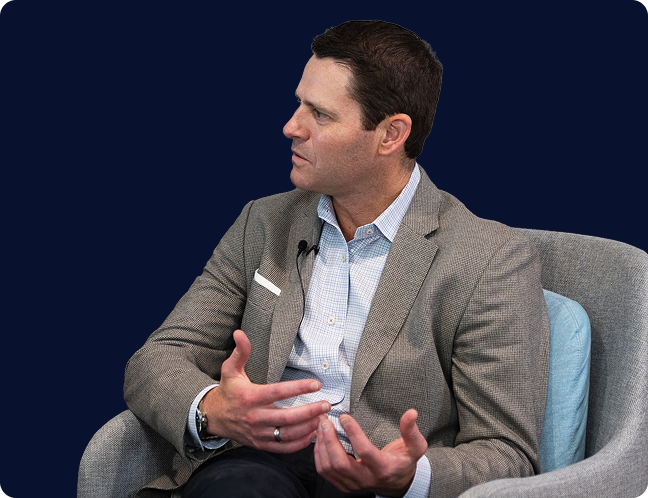
Dave Tobias
Dave is Chief Product Officer at Nearmap, where he leads product strategy across the property intelligence portfolio. He co-founded Betterview, the application now used by carriers across the US for underwriting and risk selection, and joined Nearmap through its acquisition in December 2023. He has spent more than a decade building the tools insurers use to understand property risk.
Meet the Guest
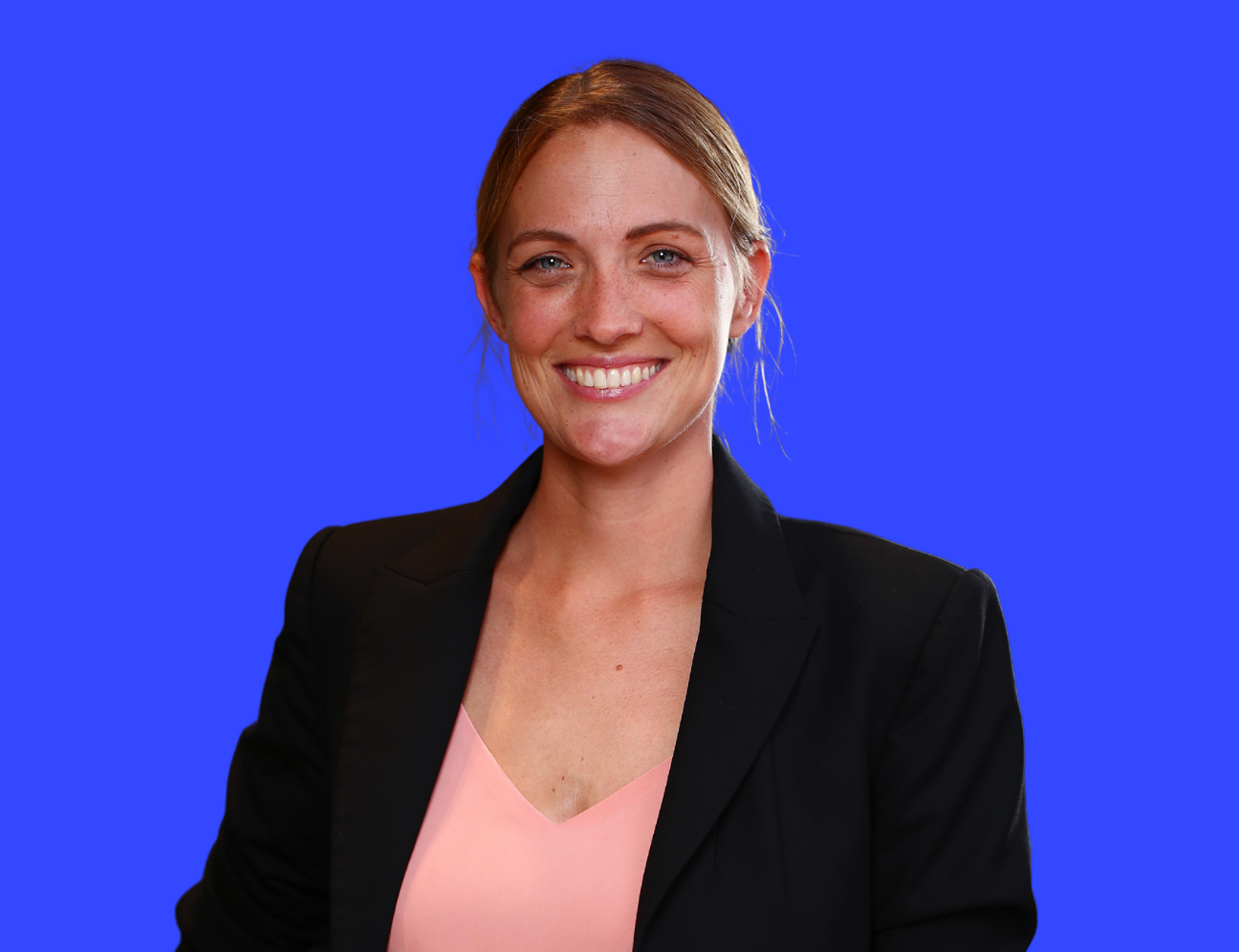
Lynn Thompson
Lynn Thompson is a Partner with QBE Ventures, leading strategy and partnerships globally to invest in and work alongside early stage and tech companies with the potential to transform insurance.
Lynn has led and been involved in the build of new insurtech products and solutions centred around data, partnerships and AI. Before joining QBE Ventures Lynn worked in a data start up, ran an AI hub in Singapore and started her career in management consulting with Deloitte.
Lynn is passionate about investing in strategic partnerships to bring innovative solutions to global problems faced by insurers, customers and broker partners.
See the Reality Layer
Every episode covers claims, catastrophe response, and the AI reshaping insurance technology.
View more episodesExplore the latest
Nearmap Labs
Explore the research and early-stage technology behind what's next in property intelligence. Get hands-on with new tools before general release, and meet the people building them.
Explore Nearmap Labs
Customer Stories
See how carriers put property intelligence to work across underwriting, renewals, claims, and catastrophe response, and what changed once they did.
Read Customer Stories
Webinars
Go deeper on the topics the show covers. Sessions with the practitioners and product teams closest to the work, available on demand.
View Webinars