Construction monitoring: Clarity and alignment at scale
Keep major projects on track with construction monitoring from Nearmap, which delivers fast, visual progress insights to reduce risk and improve compliance.
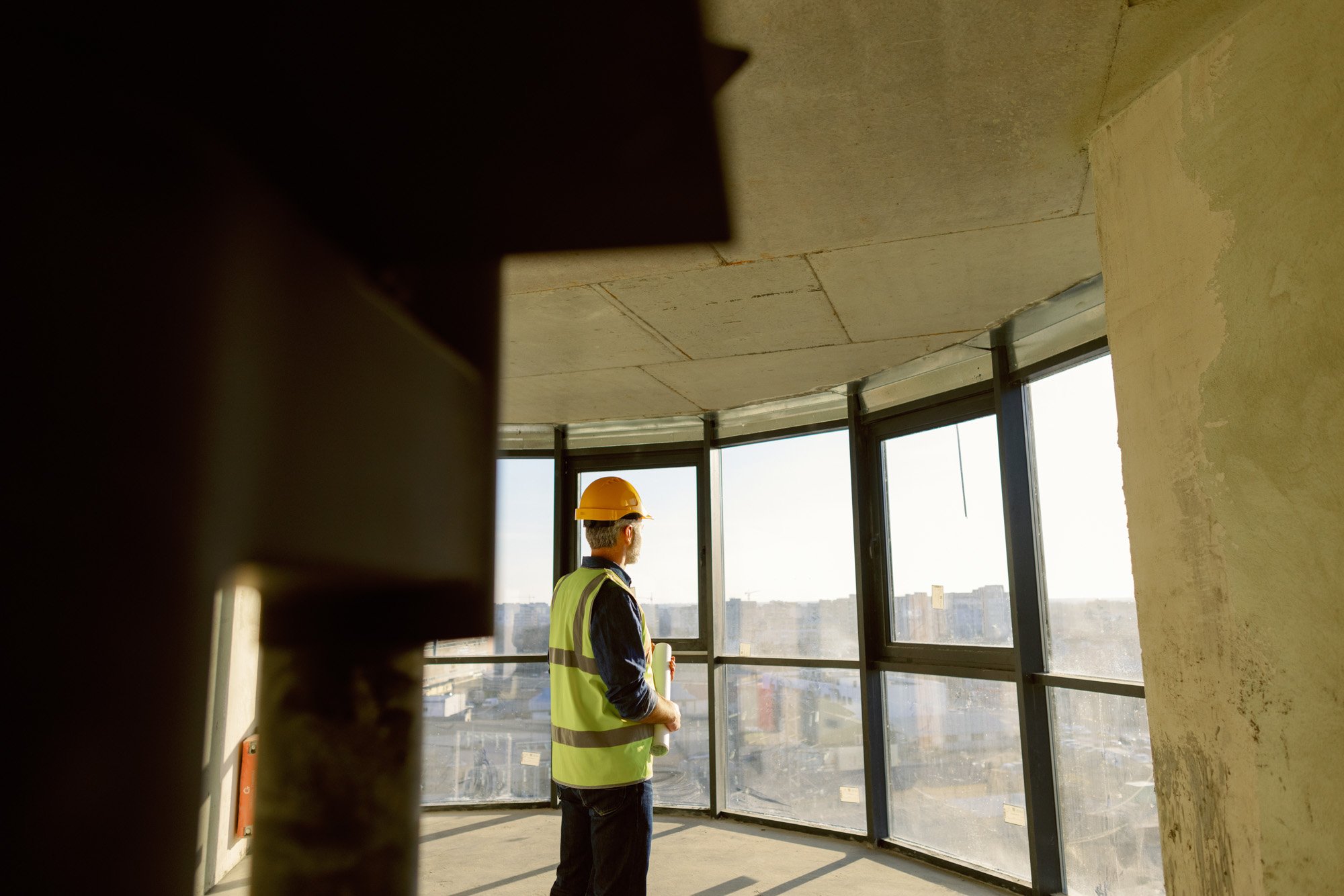
Construction monitoring provides project teams and stakeholders with the visibility they need to confidently evaluate project progress, validate site conditions, understand emerging risks, and ensure every stakeholder remains accountable. The combination of real-time construction site monitoring, construction progress monitoring software, and modern construction monitoring tools provides stronger clarity than traditional reporting can deliver.
It keeps capital protected. It reduces rework. And it brings momentum to some of the largest and most complex projects on Earth — from commercial complexes and infrastructure expansions to industrial facilities and everything in between.
With Nearmap high-resolution aerial imagery, organisations gain precision that surpasses satellite and on-site photography alone. Frequent coverage, consistent capture angles, clear resolution, and easy data delivery support project monitoring at any stage.Together, construction monitoring and Nearmap imagery turn confusion into visibility — and visibility into smarter, faster decisions.
What is construction monitoring?
Construction monitoring is the systematic process of tracking how a project progresses relative to design, safety requirements, contract obligations, regulatory expectations, and budget. It evaluates the built environment — from raw site to construction — and monitors progress against design, safety requirements, contract obligations, regulatory expectations, and budget. It evaluates the built environment — from raw site to finished asset.
It acts as a continuous truth-check. Teams compare what was planned against what was built, and evaluate whether the schedule, permitting, scope, and installation practices remain compliant with expectations. Traditionally, this required frequent site walks, meetings, and manual documentation. Today, construction monitoring software, real-time construction site monitoring systems, and imagery-driven workflows make the process faster and less burdensome.
For firms, construction monitoring provides crucial risk insight. When a project falls behind schedule, encounters weather or material challenges, or shows signs of structural deviation, the correct data enables rapid intervention. It protects capital, safety, and compliance.
What are the seven stages of construction?
Construction projects typically move through seven primary stages. Each benefits from construction progress monitoring:
- Planning and design
- Pre-construction
- Procurement
- Construction
- Commissioning
- Handover
- Operations
During planning and pre-construction, monitoring focuses on site evaluation, permitting, zoning, environmental assessment, and early-stage logistics. During procurement, visibility helps validate material delivery and staging.
The construction phase demands high-quality transparency. Here, construction site monitoring plays a central role. Stakeholders evaluate milestones, installation pacing, safety, subcontractor performance, and alignment with the scope.
Commissioning and handover require validation of final installs, operational testing, documentation, and warranty transfer. Once operational, the facility may still demand periodic monitoring to support maintenance planning or regulatory reporting.
Monitoring ensures each phase stays on track, reducing ambiguity and unnecessary delay.
What is the use of construction monitoring?
Construction monitoring is used to verify execution quality, ensure timelines remain realistic, and provide documentation that supports payment applications, safety reviews, and compliance requirements.
Owners use monitoring to prioritise early risk detection. Lenders use it to validate capital draw. Insurers use it to maintain oversight of exposure across assets. Local councils use it to ensure construction aligns with permitting and zoning conditions.
It also becomes a key source of historical truth. Every imagery capture or milestone record provides insight into how a site evolved, what changed, and how that change affected future performance.
Monitoring is the thread that connects planning to results — supporting decision-making at every turn.
Why is construction monitoring important?
Construction monitoring protects budgets, schedules, and communities. Without it, deviations may go unnoticed until late, when fixes cost significantly more. Safety risks may escalate. Installed systems may not match the specification. Systems may overlook regulatory conditions. These issues trigger cascading delays, insurance claims, and legal disputes.
By building a consistent view of project conditions, construction monitoring supports transparency. It gives teams time to react. It validates quality before systems become inaccessible. It keeps stakeholders honest.
For construction firms, strong monitoring equals stronger risk management. They see exposure more clearly, track real-world conditions, validate work, and ensure the finished asset aligns with expectations.
Types of construction monitoring
Construction monitoring includes several intertwined lenses:
- Progress oversight
- Schedule alignment
- Safety assurance
- Financial validation
- Quality verification
- Regulatory compliance evaluation
- Warranty documentation
Not every team performs every layer, but each adds value.
The most profound insight comes when these lenses work together. Nearmap imagery helps unify them by providing frequent, accurate, and spatially consistent visuals.
What are the techniques of construction monitoring?
Construction monitoring uses a blend of physical and digital methods. Traditional approaches include on-site inspections, survey measurements, and paper-based checklists. More advanced techniques use real-time construction site monitoring systems, building information models (BIM), IoT sensors, drone scans, and aerial imagery from platforms like Nearmap.
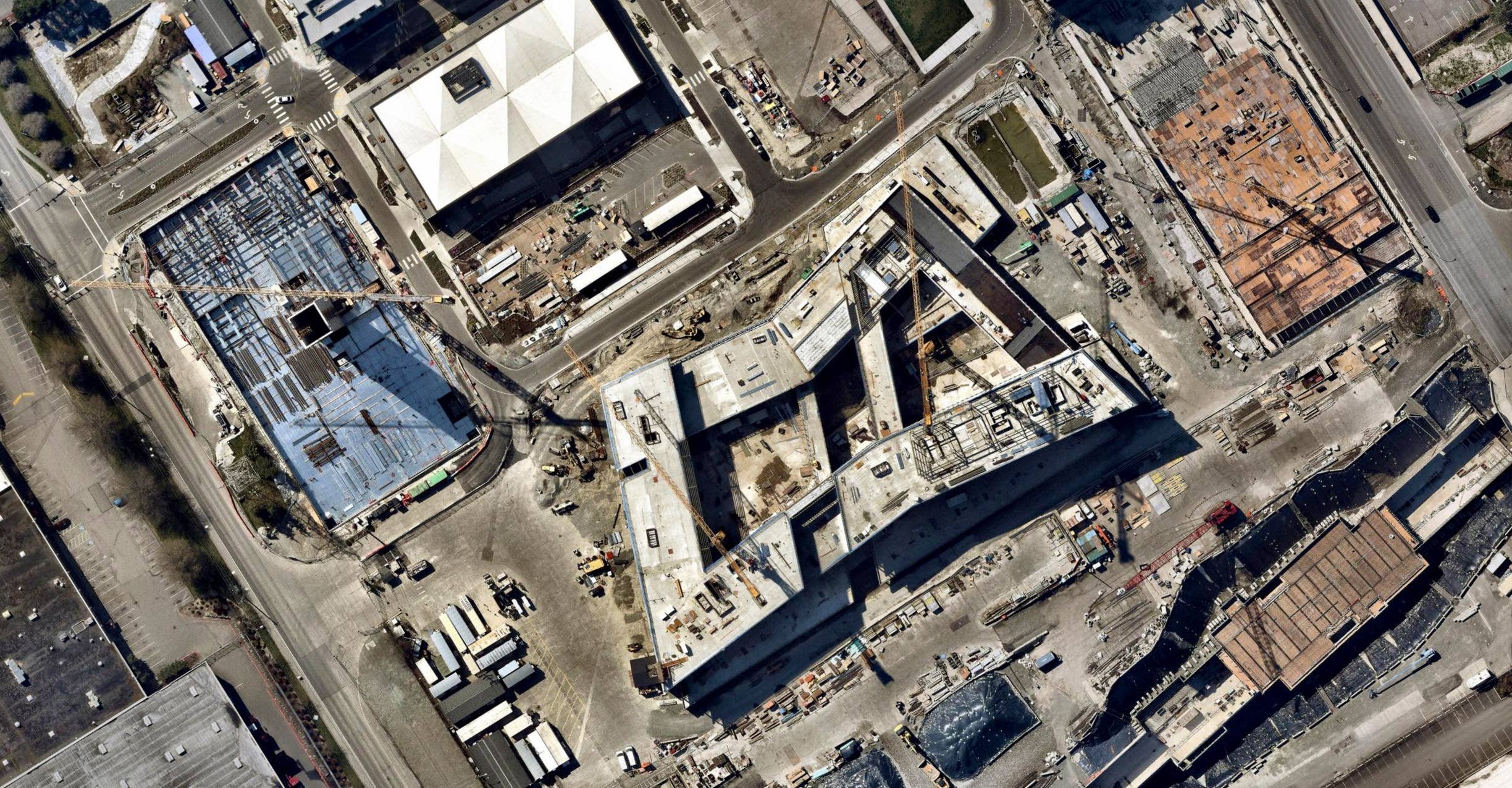
Imagery reinforces truth. Nearmap aerial captures deliver clarity at city scale — across roads, infrastructure, residential zones, and large industrial projects. Crews don’t need to pause. Teams don’t need to rely solely on descriptions. Instead, they see a precise, measurable context from above.
Combined with construction progress monitoring software, these techniques create a continuous, shareable record.
What are the best practices for construction monitoring?
The most important practices are: check early, check often, and check visually.Early monitoring guarantees each stage uses a verified base. Monitoring often keeps misalignment from spiraling. Monitoring visually reduces subjectivity.
For construction firms, the strongest programs:
- Establish documentation cadence
- Create integration across the field and office
- Use unified imagery and documentation
- Emphasise accuracy over volume
When the entire project team shares data consistently, communication improves, disputes decline, and timelines tighten.
What are the challenges of managing a construction project?
Managing a construction project means coordinating countless variables at once — design, procurement, labour, weather, supply chains, and compliance. Delays can escalate quickly. Shortages force rescheduling. Design revisions cascade across subcontractors.
Teams without strong construction project monitoring often struggle to maintain pace. One misunderstanding of site conditions or sequencing can lead to disputes, unexpected change orders, and costly rework. And when documentation is weak, resolution becomes slower and more political.
High-res monitoring isn’t about replacing field teams. It’s about giving them the visibility they need to stay efficient.
Which tool is used for construction monitoring?
Construction monitoring tools vary by organisation. However, Nearmap aerial imagery has become a core foundation because it complements all other systems. It gives teams real-world context they can measure, annotate, and share.
Teams integrate aerial mapping with:
- Construction progress monitoring software
- BIM models
- Scheduling systems
- Digital twins
- Inspections
- Permit oversight systems
Imagery brings everything together. It turns words into proof.
Benefits of construction monitoring
Construction site monitoring supports clear communication, accelerates decisions, and helps stakeholders identify emerging challenges early. It eliminates guesswork. It keeps control tight. It proves compliance. Monitoring also helps teams learn — each project becomes an educational resource for future planning.
Advantages of construction monitoring
The most compelling advantage is truth. Construction monitoring removes ambiguity. Everyone sees what is happening, when, and why. That truth builds trust, speeds approvals, and eliminates unnecessary field visits.
With consistent aerial data, you don’t rely on last month’s memory — you rely on evidence.
Use cases of construction monitoring
Construction monitoring supports:
- Claims resolution
- Progress validation
- Contract compliance
- Payment draw certification
- Safety compliance documentation
- Local council permitting
- ESG monitoring
- Workforce coordination
- Post-disaster assessment
It adapts to commercial, infrastructure, industrial, and public assets with ease.
Construction monitoring + BIM
BIM already gives teams a digital blueprint of the building. Construction monitoring connects that model to real-world activity. Nearmap imagery helps teams validate whether the as-built conditions align with the BIM model. Variations become apparent — and actionable.
Construction monitoring + digital twins
Digital twins thrive on real-world data. Construction monitoring feeds that data. It allows teams to update models based on actual site conditions — dramatically improving how firms manage infrastructure and facilities over time.
Construction monitoring + insurance workflows
Firms evaluate risk from the moment a project begins. Construction progress monitoring ensures exposure stays visible. With imagery, teams can verify compliance, confirm safety measures, and track site conditions that may influence decisions.
Construction monitoring + ESG / compliance
Environmental, social, and governance metrics increasingly influence capital and permitting. Monitoring supports ESG by validating land disturbance, community impact, stormwater patterns, erosion control, and more.
Construction monitoring + AI analytics
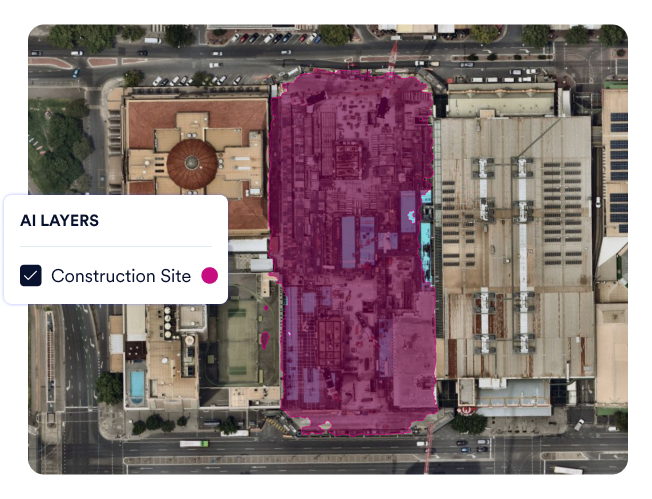
AI amplifies construction monitoring by detecting anomalies, classifying structural changes, and highlighting areas that need attention. Combined with Nearmap data, AI turns large projects into structured, automated insight streams.
Drones vs aerial vs on-site capture
On-site capture delivers detail but lacks scope. Drones add flexibility but struggle at scale. Aerial imagery from Nearmap covers broad geographies consistently. Together, these tools form a strong monitoring ecosystem that protects every asset lifecycle stage.
Real-time construction site monitoring system workflows
A real-time construction site monitoring system uses imagery, data, and innovative tools to keep crews aligned. It reveals the project status at a glance. It pairs images with annotations so everyone sees key changes.
Workflow often looks like this:
- Capture site imagery
- Process imagery into usable layers
- Compare against prior weeks
- Add notes or instructions
- Share with stakeholders
Everyone can react instantly. That agility shortens schedules, reduces call volume, and accelerates decision-making.
Construction progress monitoring software
Construction progress monitoring software keeps everything structured. It holds images, measurements, milestones, and documentation. It ties into BIM so that teams can compare as-built with as-designed. It structures the data so the big picture is easy to see.
Most importantly, it replaces reporting lag with real-time clarity.
Construction project monitoring services
Some organisations outsource monitoring. Construction project monitoring services provide independent evaluation and documentation. It keeps reporting neutral and consistent. Owners use these services to validate contractor activity. Lenders and insurers use them to confirm claims. Councils use them to verify code compliance.
When paired with modern imagery, third-party services gain even more precision.
Additional use cases worth highlighting
Construction monitoring isn’t just about risk and reporting. It supports sustainability. When imagery illustrates disturbance, teams adjust. It supports litigation because image history creates defensible records. It supports community engagement because stakeholders see progress rather than hearing about it.
It also improves innovation. Teams learn faster because they can look back, compare, and iterate.
Frequently asked questions
You have questions, we have answers.It refers to a monitoring category or methodology for classifying oversight activities by scope, risk, and reporting needs. Many agencies and insurers use CM4 frameworks to ensure documentation aligns with high-risk asset classes.
Residential, commercial, industrial, and infrastructure.
It matters because it reduces risk, protects capital, reinforces compliance, supports safety, and gives stakeholders a real-time, trustworthy understanding of project conditions.
Progress monitoring focuses on pacing and schedule alignment; safety monitoring identifies hazards and compliance gaps to protect workers.
Imagery provides measurable, unbiased visual records of site activity. This strengthens reporting, removes ambiguity, and accelerates decisions.
See the full picture
Construction monitoring gives firms the precision needed to protect capital at scale. Nearmap aerial intelligence sharpens that precision by delivering high-res, frequently updated views that show how projects evolve — without slowing work on the ground.
See how Nearmap imagery accelerates construction monitoring and protects your investment.