What Springfield Lakes revealed about disaster recovery
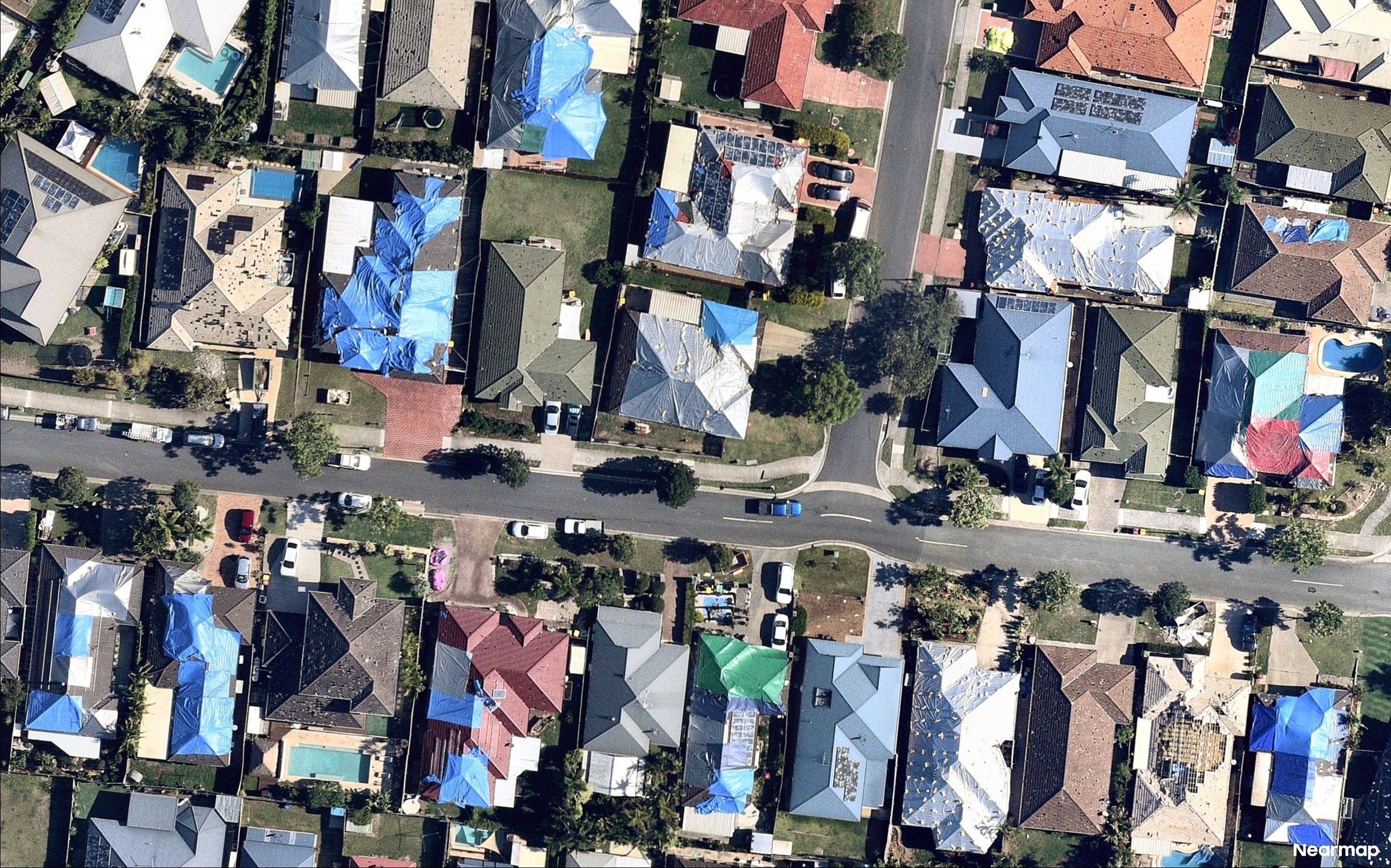
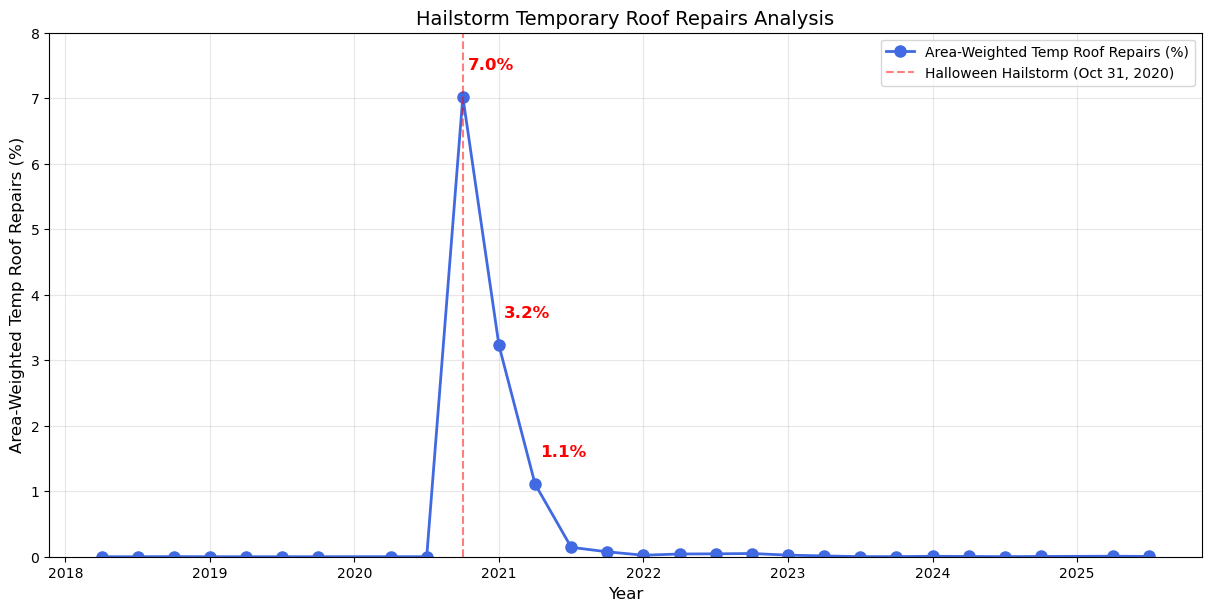
The aftermath
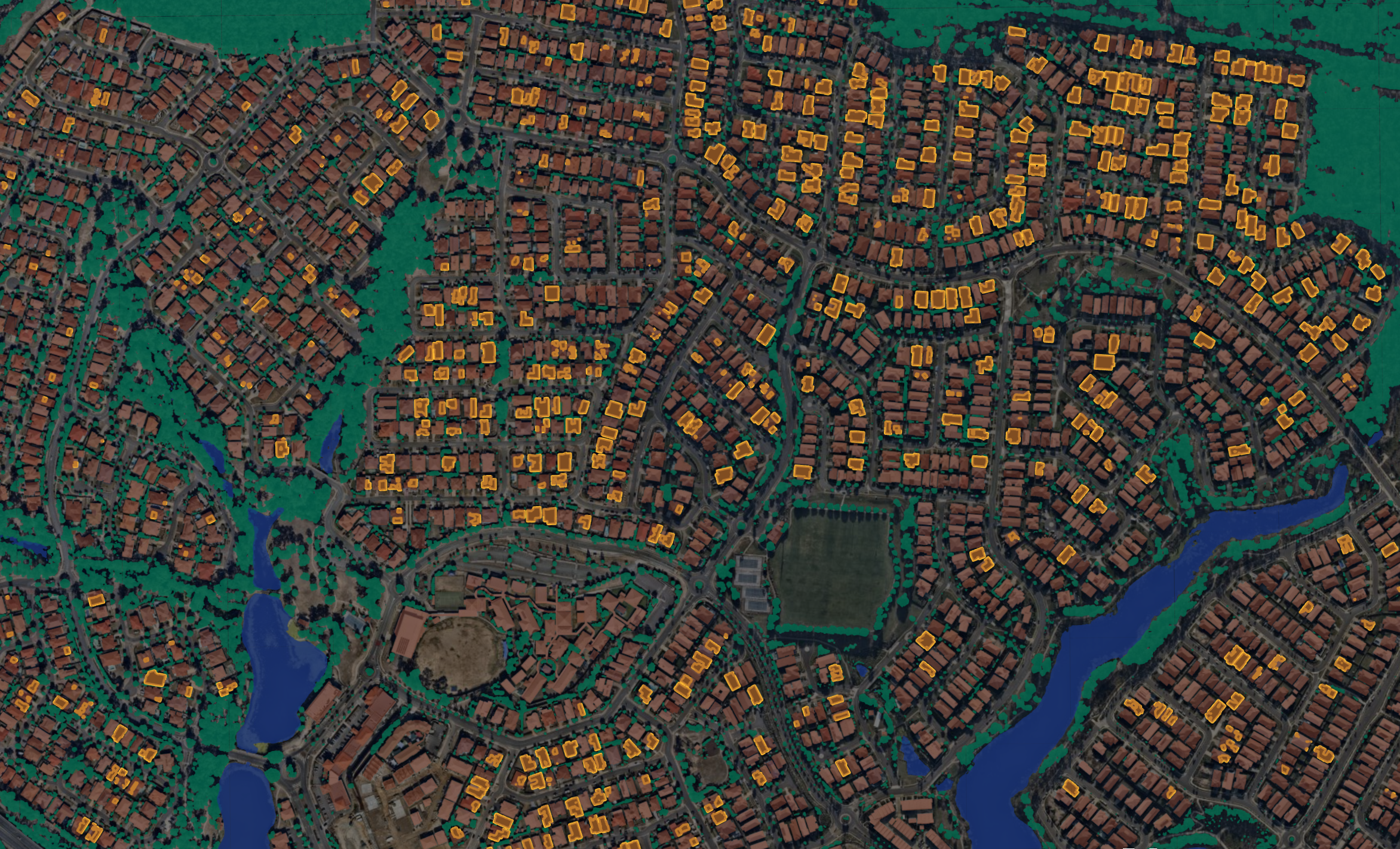
Nearmap AI detects property features
Building (Orange), Roof with Temporary Repair (Yellow), Med & High Vegetation (Green), and Water (Blue)
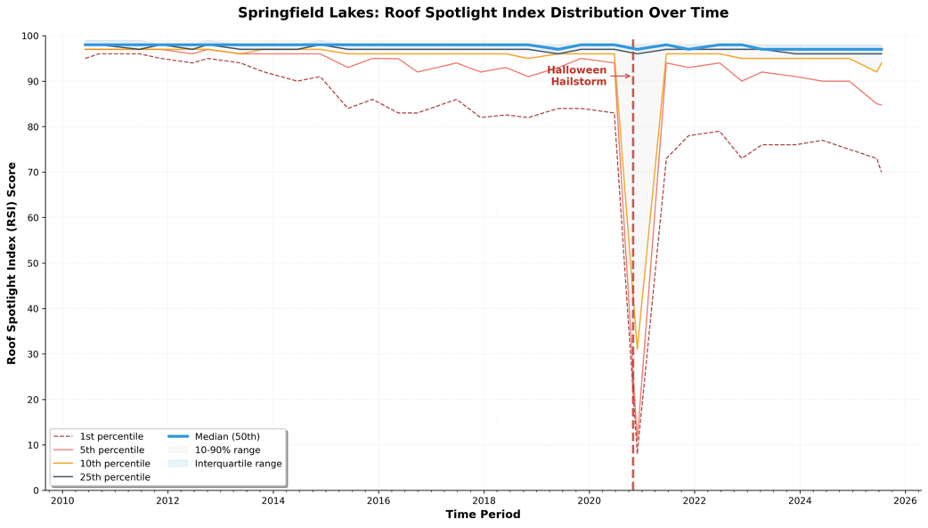
Except it didn’t fully recover
We track something called the Roof Spotlight Index, or RSI. It’s a 0-100 scale where 100 is a pristine new roof and 0 is a disaster. Before the storm, even the worst 1% of roofs in Springfield Lakes were scoring around 95. The suburb was relatively new. Roofs were in good shape.
The repair vs. replace divide
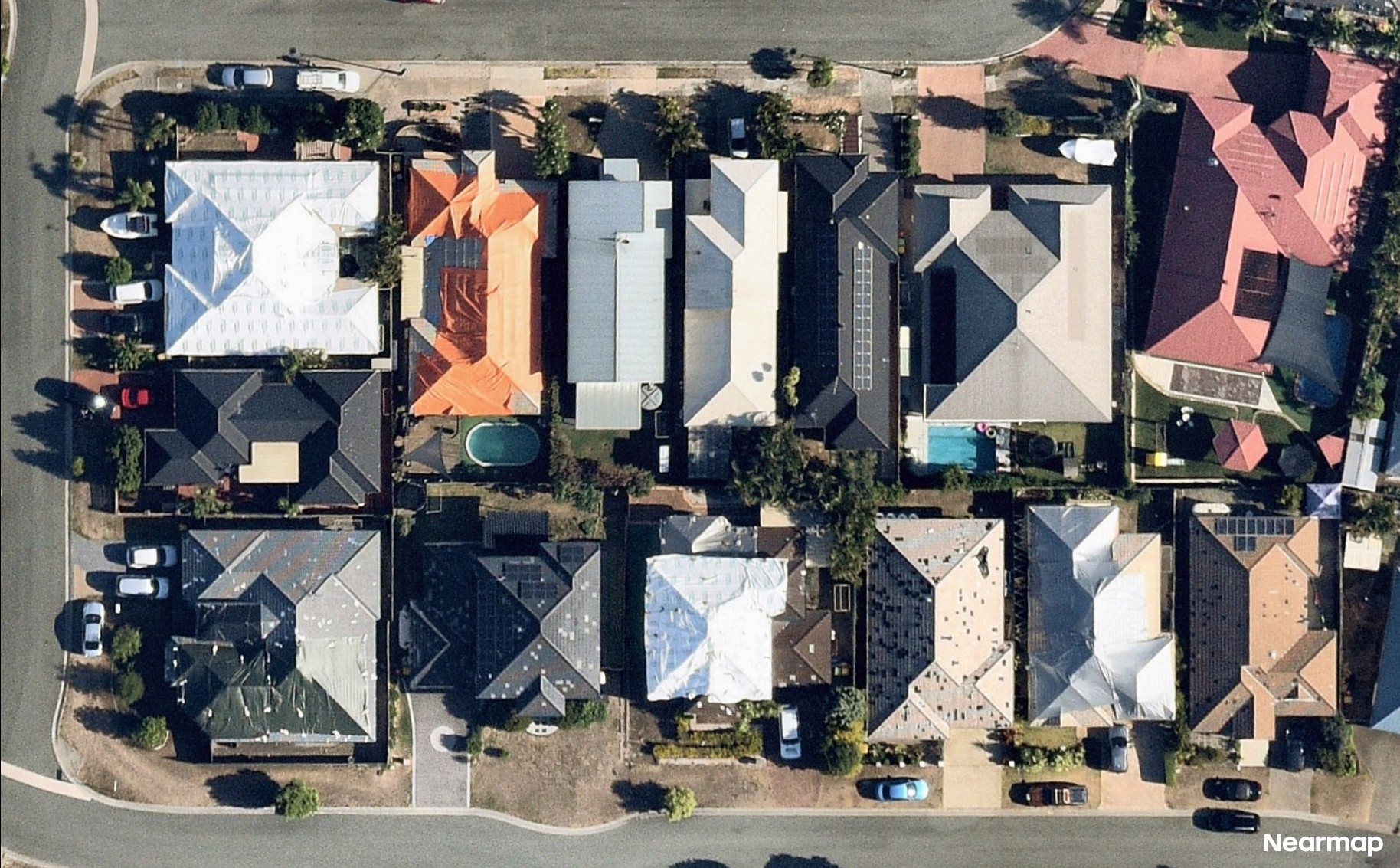
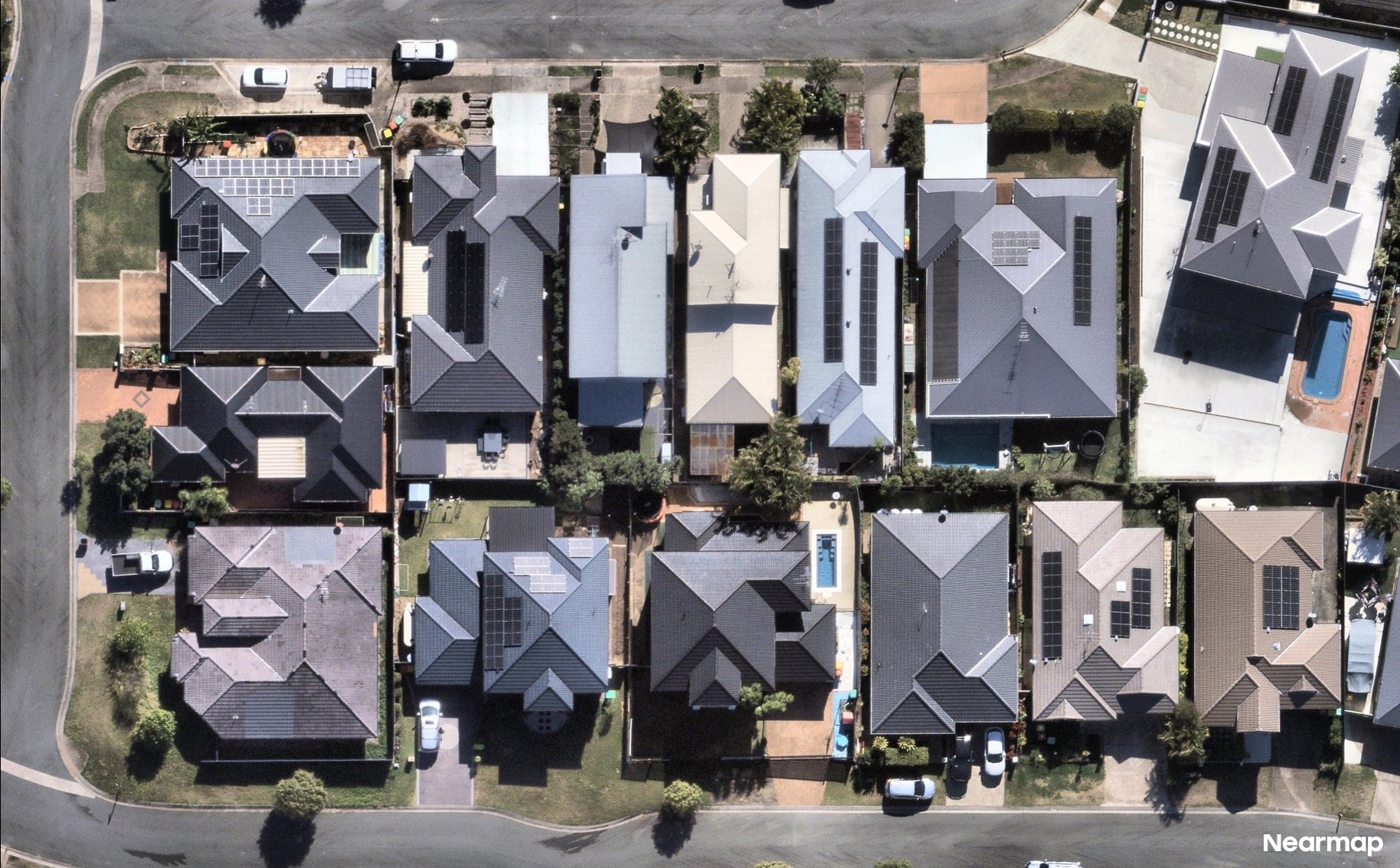
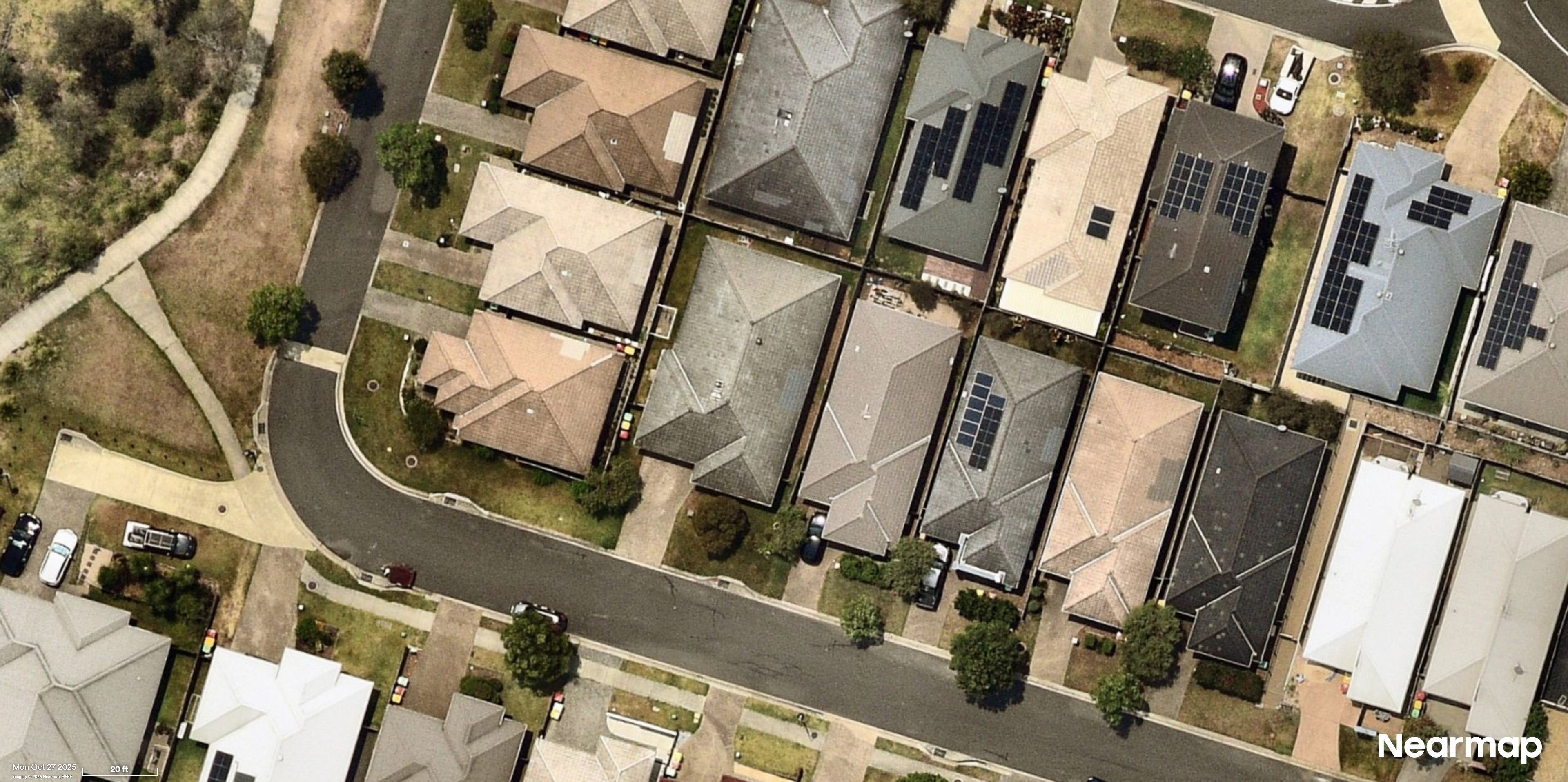
Looking at individual properties over time, a pattern emerged. Roofs that got completely replaced bounced back to high RSI scores. Roofs that got patched? They’re still showing wear. You can see it in the imagery: that patchwork appearance where some sections look newer than others.
Metal won the fight
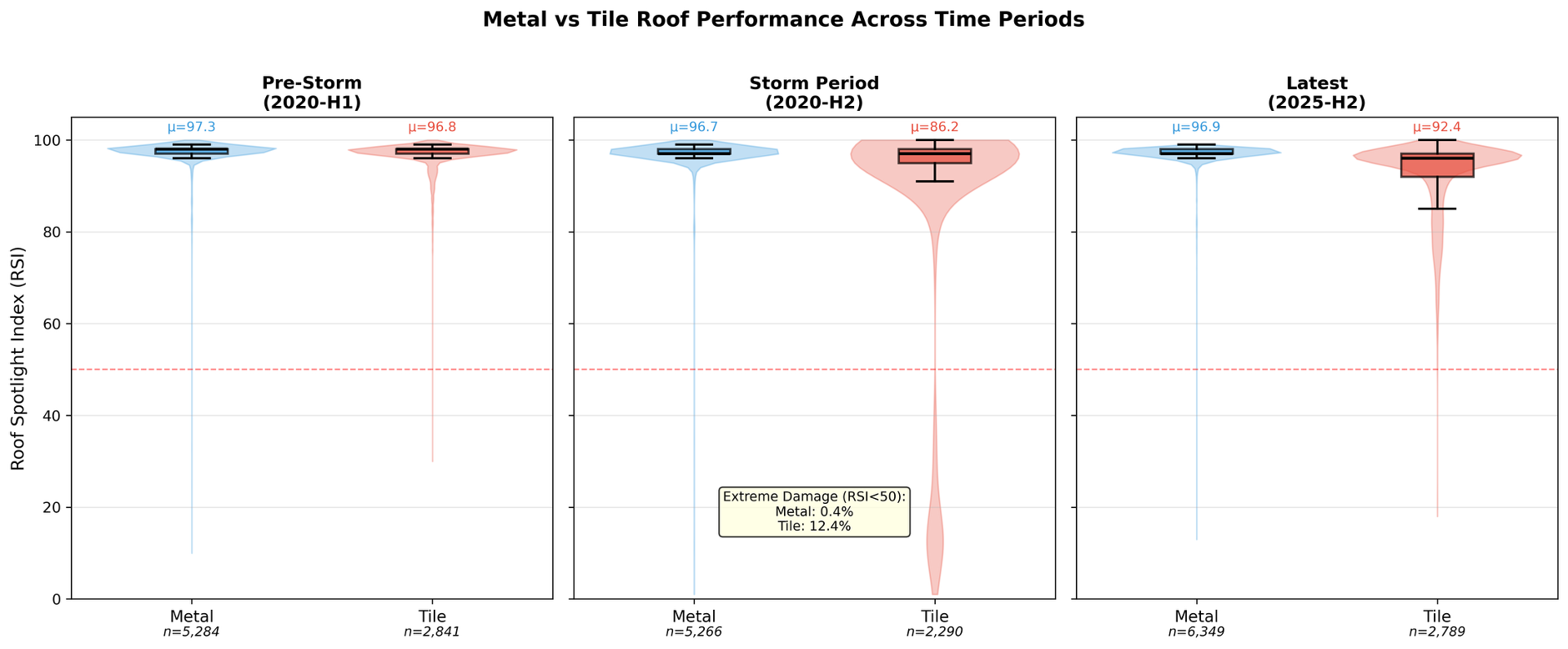
Before the storm, metal and tile roofs in Springfield Lakes had basically identical RSI scores—tracking together around the same levels. After the storm? Metal roofs barely budged. Tile roofs got hammered.
When ‘closed’ doesn’t mean recovered
Of those 45,000 claims filed after the Springfield Lakes hailstorm, 93% are now closed. That sounds like success. The system worked, people got paid, repairs got done.
A decade fighting the elements
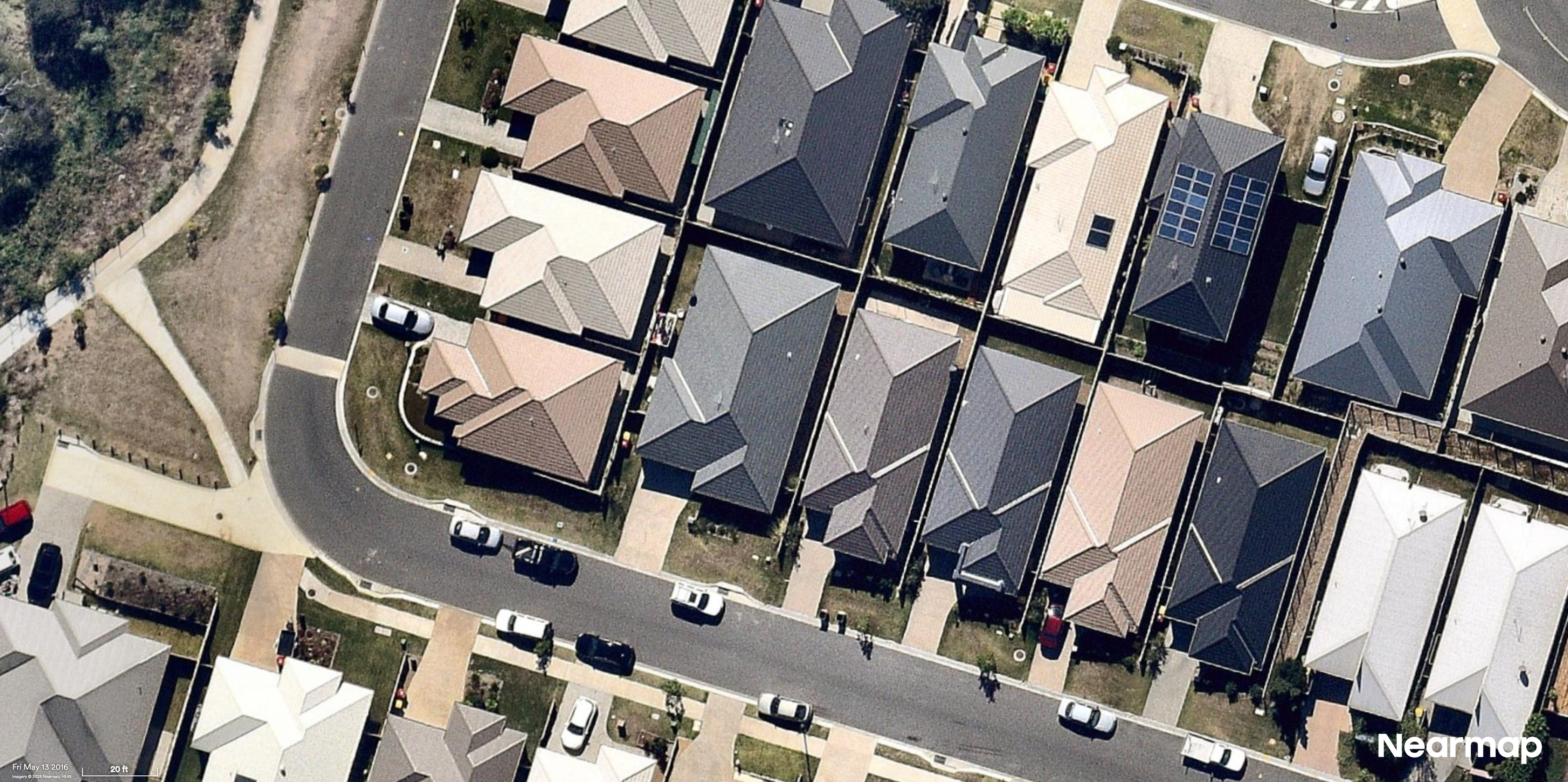
Pull up the aerial imagery from 2016 and you’re looking at pristine rooflines. Brand new developments, fresh tiles, clean gutters. These roofs were built to last decades.
A new way to understand recovery
Need a better way to track disaster recovery?
Bring your challenge to us and we’ll provide tailored advice for how you could use aerial imagery and actionable AI data to accurately track recovery and improve resilience.
About the author
Dr. Michael Bewley leads the Nearmap AI and Computer Vision group, turning large scale aerial imagery into visual and semantic products for customers in property insurance, local government, and more. Starting as the company’s first data scientist in 2017, Mike lead the first national scale beta launch and subsequent product iterations for Nearmap AI. He now focusses on building out the technology that will power future products, recently completing the technical integration of a recent acquisition in the Insuretech space into the Nearmap AI stack. Mike has experience in a range of high stakes and regulated industries, from medical devices at Cochlear to underwater robotics during his PhD at the ACFR.